
When it comes to caring for acne-prone skin, the best approach is a delicate balancing act. You need powerful, targeted ingredients to deal with breakouts, but you also need gentle, barrier-supporting formulas to keep your skin calm and healthy. A great starting point often includes a salicylic acid cleanser, a niacinamide serum to manage oil and inflammation, a lightweight, non-comedogenic moisturiser, and, of course, a daily SPF 50+ sunscreen to stop acne marks from turning into dark spots.
Your Path to Clearer Skin Starts Here
Trying to find skincare that actually works for acne-prone skin can feel like a frustrating, never-ending battle. This guide is here to cut through all that noise and confusion. We've put together a clear, science-backed roadmap to help you achieve the healthy, calm skin you've been working towards. Forget harsh treatments and empty promises; we’re focusing on a balanced approach that nurtures your skin's barrier while getting to the root cause of breakouts.
Think of this as your definitive resource for understanding acne triggers, mastering the key ingredients that make a difference, and building a personalised routine that delivers real, lasting results. We'll introduce you to both powerful actives and gentle philosophies, including Karin Herzog's unique oxygen-powered skincare, which is designed to restore balance without causing irritation.
Why Finding the Right Skincare Matters
The search for clear skin is a big deal for many Australians. It’s no surprise, then, that the local medicated skincare market—which heavily targets acne—is expected to grow to USD 2,080.6 million by 2034. With over 70% of Australians dealing with some form of acne in their lifetime, it’s clear people are looking for real solutions with proven ingredients like salicylic acid, retinoids, and benzoyl peroxide to fight bacteria and inflammation.
A successful acne routine isn't about being aggressive; it's about being consistent and balanced. The goal is to calm inflammation and clear out congestion without stripping the skin's protective barrier, because doing so often just makes breakouts worse.
This guide is designed to give you the knowledge you need to build that balanced, effective routine. We’re going to cover:
- The fundamental causes of acne and the most common triggers.
- Hero ingredients that are proven to unclog pores and reduce redness.
- Step-by-step templates for your morning and evening routines.
- Common mistakes that might be getting in the way of your progress.
And for those specifically struggling with excess oil and stubborn breakouts, you might also find the Ultimate Guide to Korean Skincare for Oily, Acne-Prone Skin helpful. This approach is all about making informed choices that pave the way for a calmer, clearer complexion.
Getting to the Root Cause of Your Acne
If you want to find skincare that actually works for acne-prone skin, you need to look beyond the surface. Breakouts aren’t just random acts of betrayal from your skin; they’re the end result of a very specific chain of events happening underneath. Think of your pores as tiny tunnels. Acne is simply what happens when there's a traffic jam inside these tunnels.
This traffic jam is almost always caused by a perfect storm of three culprits: too much oil (sebum), a backlog of dead skin cells, and an overgrowth of acne-causing bacteria. When the oil and dead skin cells get together, they form a sticky plug that blocks the pore. This creates an environment with no oxygen, which is the perfect breeding ground for bacteria like Cutibacterium acnes to multiply. The result? The inflammation, redness, and swelling we know all too well as a pimple.
Once you understand that core process, the next step is to figure out what’s causing the traffic jam in the first place. These triggers usually fall into two camps: internal or external factors.
Internal Acne Triggers
Internal triggers are the ones that start from inside your body, creating a chain reaction that eventually shows up on your skin. Pinpointing these is crucial because they often need more than just a topical cream to get under control.
The usual suspects include:
- Hormonal Fluctuations: Androgens, a group of hormones that both men and women have, can put oil production into overdrive. This is the main reason acne is so common during puberty, around your menstrual cycle, and during other times of hormonal upheaval.
- Stress and Cortisol: When you're stressed, your body pumps out cortisol. This stress hormone is known to increase inflammation and oiliness, basically rolling out the red carpet for breakouts.
- Genetics: It's an unfortunate truth: if your parents had acne, you're more likely to deal with it too. Your genes can influence everything from how oily your skin is to how intensely it reacts with inflammation.
External Acne Triggers
External triggers are things in your environment or daily life that directly impact your skin from the outside. The good news is these are often much easier to manage once you know what to look for, especially here in Australia.
For many Aussies, these external factors are a huge piece of the acne puzzle:
- Intense UV Exposure: A bit of a tan might seem like it hides redness, but sun exposure actually damages the skin barrier, cranks up inflammation, and makes those post-acne marks stick around for longer. With Australia's notoriously high UV index, daily sun protection is absolutely non-negotiable.
- Pollution and Grime: City living means your skin is constantly exposed to pollutants. These tiny particles can clog pores and trigger oxidative stress, leading to inflammation and breakouts.
- Skincare Choices: Using harsh, stripping cleansers or slathering on thick, pore-clogging (comedogenic) moisturisers can throw your skin's delicate balance completely out of whack and make acne much worse.
This growing understanding of how our bodies and environment impact skin is changing everything. With tele-dermatology platforms surging 40% since 2022, people are more clued in than ever. In fact, 65% of consumers now specifically look for dermatologist-tested products. Here in Australia, where 1 in 5 adults battles chronic acne linked to stress, hormones, and a brutal UV index that can hit 11 in summer, the demand for smart, preventive skincare is through the roof. You can explore more data on the Australian anti-acne cosmetics market to see the full picture.
The key takeaway is that acne is multifaceted. A successful approach doesn't just treat the pimple you see today; it addresses the underlying causes to prevent the ones that might show up tomorrow.
By figuring out whether your breakouts are mainly driven by internal factors like hormones or external ones like your environment, you can build a much smarter, more targeted skincare routine. This knowledge empowers you to choose products with ingredients that tackle your specific triggers, moving you from a frustrating cycle of spot-treating to a proactive state of maintaining clear, healthy skin for the long haul.
Key Ingredients Your Acne Prone Skin Needs
Walking down the skincare aisle can feel like trying to decipher a foreign language. When you have acne-prone skin, learning to speak that language—especially the words for powerhouse active ingredients in skincare—is non-negotiable. It’s the key to finally choosing products that deliver real results.
Think of building your skincare routine like putting together a specialised team. Each ingredient has a distinct job description, whether it's breaking up pore congestion, calming angry inflammation, or fighting off bacteria. The secret is to assemble a balanced team that tackles the problem from all angles without causing more chaos.
So, what's really happening inside your pores during a breakout? It's essentially a traffic jam caused by excess oil, a build-up of dead skin cells, and bacteria moving in.
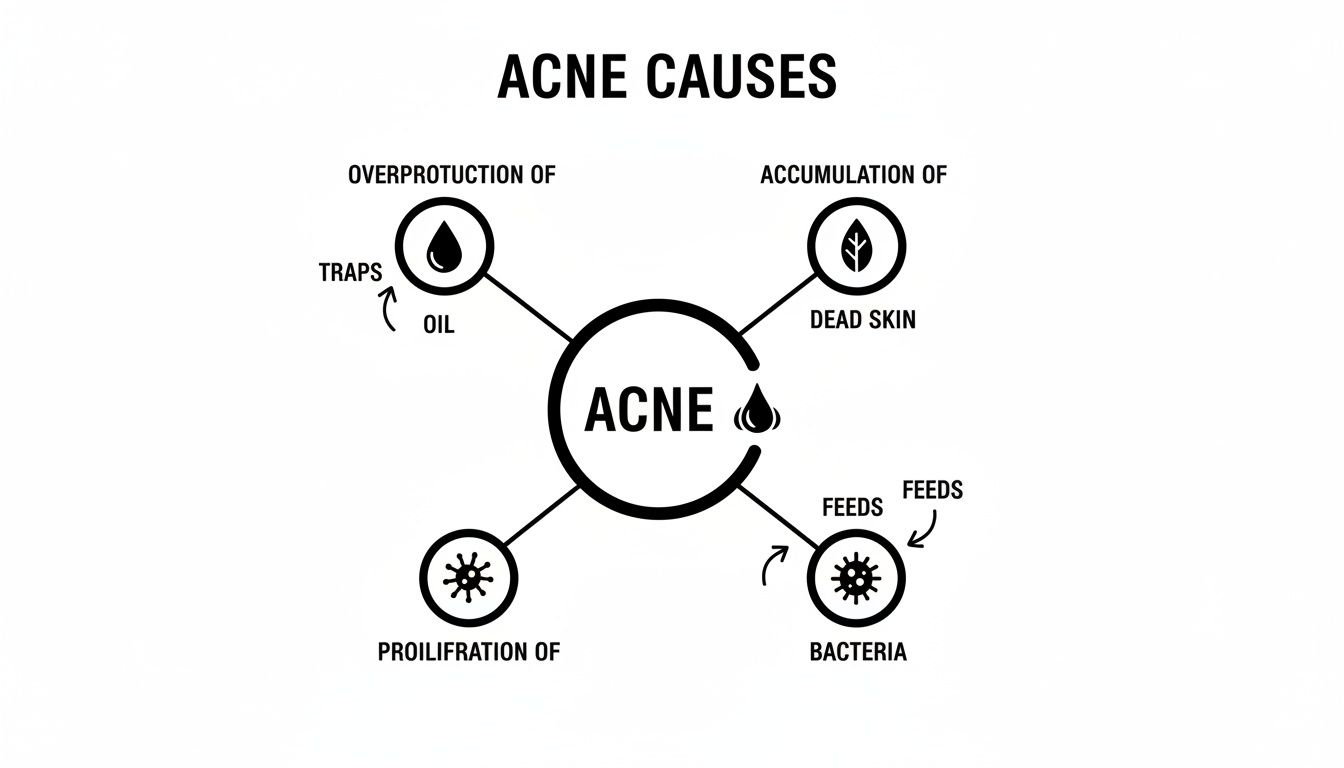
This visual shows why a multi-pronged approach with the right ingredients is so effective. You need to clear the jam and soothe the irritation at the same time.
The Pore Uncloggers: Salicylic Acid and Retinoids
First up, you need your exfoliants. These are the specialists tasked with clearing out the congestion that starts the whole breakout cycle in the first place.
Salicylic Acid, a Beta Hydroxy Acid (BHA), is an absolute game-changer for oily and acne-prone skin. Because it’s oil-soluble, it can dive deep into your pores and dissolve that stubborn, sticky mix of oil and dead skin cells that creates a plug. If you're looking for the 8 best ingredients for acne prone skin, Salicylic Acid is always near the top of the list.
Retinoids are another heavyweight in this category. This family of Vitamin A derivatives works by hitting the fast-forward button on your skin's natural cell turnover process.
- Faster Cell Renewal: They encourage old, dead skin cells to shed more efficiently, stopping them from piling up and clogging pores before a breakout can even begin.
- Smoother Texture: As a brilliant side effect, this rapid turnover also helps improve skin texture and fade the appearance of those stubborn post-acne marks over time.
A quick word of advice: when you start with retinoids, go slow. Introduce them just one or two nights a week and gradually build up as your skin gets used to them. This helps you get all the benefits while minimising any potential dryness or irritation.
The Calmers and Balancers: Niacinamide and Oxygen
Next on your team are the ingredients that soothe inflammation and bring your skin back into balance.
Niacinamide (Vitamin B3) is a multi-tasking superstar that’s incredibly well-tolerated by almost everyone. It helps get oil production under control, reduces the redness and swelling that comes with breakouts, and strengthens your skin's protective barrier. A stronger barrier means your skin is less reactive and much better at healing itself.
Then there’s stabilised oxygen—a truly groundbreaking ingredient for calming acne. Unlike many traditional treatments that can be quite harsh, oxygen works in harmony with your skin. The acne-causing bacteria, C. acnes, is anaerobic, meaning it thrives in places without oxygen (like a clogged pore).
By delivering a controlled dose of oxygen deep into the skin, you can effectively neutralise these bacteria from within. This approach tackles the root cause of inflammatory acne without stripping the skin or causing excessive dryness.
For Aussies with sensitive, acne-prone skin, this is where Karin Herzog's original Swiss oxygen skincare truly shines. The stabilised oxygen technology penetrates 3mm beneath the surface to kill anaerobic acne bacteria, boosting oxygen levels by 50% for faster healing without redness. In brand studies aligned with Swiss clinical standards, bestsellers like Vita-A-Kombi 1% for mild acne reduced lesions by 45% in user trials.
This makes oxygen a powerful yet gentle way to achieve clear, comfortable skin.
Your Acne-Fighting Ingredient Cheat Sheet
To make things even easier, here’s a quick-reference table to help you remember who does what on your skincare team.
| Ingredient | Primary Function | Best For | Karin Herzog Product Example |
|---|---|---|---|
| Salicylic Acid (BHA) | Deep pore exfoliation, dissolves oil & dead skin | Oily, congested skin; blackheads and whiteheads | (While not a core KH ingredient, it pairs well with our oxygen treatments) |
| Retinoids | Speeds up cell turnover, prevents clogged pores | Persistent acne, texture issues, post-acne marks | Vita-A-Kombi 1, 2, or 3 (combines Retinyl Palmitate with Oxygen) |
| Niacinamide (B3) | Calms inflammation, regulates oil, strengthens barrier | Red, inflammatory acne; sensitive or oily skin | (A great supporting ingredient to use alongside our core line) |
| Stabilised Oxygen | Kills acne bacteria, reduces inflammation, speeds healing | Inflammatory acne, sensitive skin, gentle treatment | Oxygen Face Cream or Vita-A-Kombi 1 |
By understanding what each of these key ingredients does, you can stop guessing and start building a routine that is balanced, effective, and truly supportive for your acne-prone skin.
How to Build Your Ideal Skincare Routine
Understanding the science is one thing, but turning that knowledge into a consistent daily habit is where you’ll see real, lasting change. Building a routine that actually works isn’t about using a dozen different products; it's about consistency and using the right ingredients at the right time.
Think of it this way: your skin’s needs are completely different in the morning compared to the evening. Your morning (AM) routine is all about protection. It’s your shield against everything the day throws at you, from UV radiation to pollution. Your evening (PM) routine, on the other hand, is focused on treatment and repair. This is when your skin’s natural healing processes kick into high gear, making it the perfect time to bring in the heavy hitters that target breakouts and support recovery.
A solid foundation for both routines can be broken down into four core steps: Cleanse, Treat, Hydrate, and Protect. Let’s build your ideal daily regimen, one step at a time.
Your Morning Shield Routine
The goal for the morning is simple: cleanse away any oil and bacteria from the night, apply treatments that offer antioxidant defence, hydrate your skin barrier, and finish with a non-negotiable layer of sunscreen.
-
Cleanse: Start with a gentle, non-stripping cleanser. A formula with a low concentration of salicylic acid can be fantastic for keeping pores clear without leaving your skin feeling tight and uncomfortable. You want to start the day with a clean slate, not irritated skin.
-
Treat: This is prime time for antioxidants. A lightweight Vitamin C or niacinamide serum will help neutralise free radical damage from pollution and sun exposure. Over time, these ingredients also work wonders to calm inflammation and brighten those stubborn post-acne marks.
-
Hydrate: Yes, even oily skin needs hydration! Go for a lightweight, oil-free, and non-comedogenic (non-pore-clogging) moisturiser. This keeps your skin barrier healthy and can actually help regulate oil production, because dehydrated skin often panics and produces even more sebum to compensate.
-
Protect: For anyone with acne-prone skin in Australia, this is arguably the most important step. Apply a broad-spectrum sunscreen with at least SPF 30 (but SPF 50+ is ideal). Sun exposure makes inflammation worse and darkens the red or brown marks left behind by old pimples, making them stick around for much longer.
Your Evening Repair Routine
At night, your focus shifts from defence to offence. This is your chance to target existing breakouts and help your skin recover while you sleep. It’s also when you’ll introduce your most powerful active ingredients.
-
Cleanse: If you wear makeup or sunscreen (which you should!), always start with an oil-based cleanser or micellar water to melt everything away first. Follow that with your gentle water-based cleanser to make sure your skin is perfectly clean and ready to absorb your treatment products.
-
Treat: Now for the potent actives. This is the perfect spot to incorporate a targeted treatment like Karin Herzog's Vita-A-Kombi 1. This unique formula delivers a one-two punch against acne by combining stabilised oxygen with Vitamin A (retinyl palmitate).
The oxygen gets deep into the pore to kill acne-causing bacteria, while the Vitamin A gently encourages cell turnover to stop future clogs from forming. Just apply a thin layer to your face, avoiding the delicate eye area, and let it work its magic overnight. For a complete strategy, consider the benefits of a full Karin Herzog anti-acne kit, which combines key products that work together for an even better effect.
-
Hydrate: Follow your treatment with a nourishing moisturiser. A calming formula with ingredients like ceramides or hyaluronic acid will help soothe any potential irritation from your active ingredients and lock in much-needed hydration.
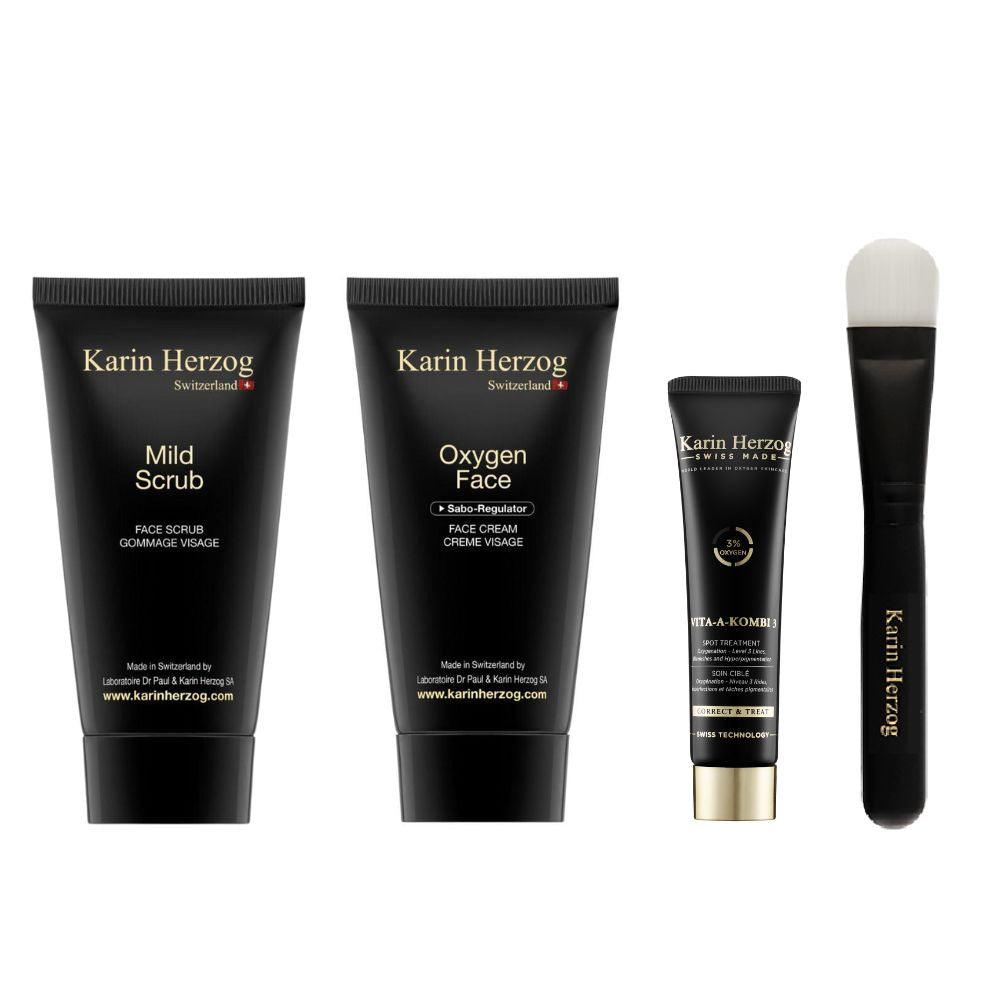
Expert Tip: To give your evening routine a boost, try using a gentle exfoliator like Karin Herzog's Mild Scrub 2-3 times per week. Use it after cleansing but before your treatment step to slough away dead skin cells. This clears the way for your active ingredients to penetrate more effectively and get the job done.
How to Introduce New Active Ingredients Safely
Adding a new active ingredient—whether it's a retinoid or an oxygen cream—is a marathon, not a sprint. Your skin needs time to adjust. Jumping in too quickly is a recipe for irritation, redness, and a damaged skin barrier, which will only set you back.
Think of it like starting a new fitness program. You wouldn't run a full marathon on day one; you’d start with shorter distances and build up your endurance. The same principle applies to your skin.
Follow this simple schedule to introduce new products while minimising irritation:
- Week 1-2: Apply the new product just twice a week (e.g., Monday and Thursday nights). Pay close attention to how your skin looks and feels the next day.
- Week 3-4: If your skin is handling it well with no issues, you can increase the frequency to every other night.
- Week 5 and beyond: If you're still not seeing any significant dryness or irritation, you can move to using it every night.
And always, always patch-test a new product on a small, discreet area (like behind your ear) for 24 hours before slathering it all over your face. If at any point your skin becomes overly red, flaky, or sensitive, just scale back the frequency or take a few days off. Listening to your skin is the most important part of building a routine that actually delivers clear, healthy results.
Common Skincare Mistakes That Worsen Acne
Navigating skincare for acne-prone skin can feel like walking through a minefield. You follow the rules, buy all the right products, but the breakouts just keep coming back. More often than not, the real culprit isn't a lack of effort but a few well-intentioned habits that are actually sabotaging your skin.
Identifying and correcting these common missteps can be the single biggest step you take towards a calmer, clearer complexion. It’s less about adding more to your routine and more about refining your approach to support your skin’s natural healing process, rather than fighting against it.
Let’s break down the most frequent mistakes we see and, more importantly, how to fix them.
Over-Exfoliating and Harsh Cleansing
When you see a pimple, the first instinct is to scrub it into oblivion. So many people reach for harsh physical scrubs with gritty particles or douse their skin in potent chemical exfoliants far too often. While exfoliation is vital for clearing away dead skin cells, overdoing it is a fast track to a damaged skin barrier.
Think of your skin barrier as a protective shield. When you scrub too aggressively, you create tiny micro-tears and strip away its natural, healthy oils. This leaves your skin vulnerable, inflamed, and irritated. In response, your skin might just panic and produce even more oil to compensate, kicking off a frustrating cycle of breakouts and shine.
What to do instead:
- Limit Exfoliation: Use a gentle exfoliant, like Karin Herzog's Mild Scrub, just 2-3 times per week. Its fine marble powder provides effective yet gentle removal of dead cells without causing irritation.
- Choose Gentle Cleansers: Opt for a pH-balanced, non-stripping cleanser that leaves your skin feeling comfortable, not tight or squeaky.
Skipping Moisturiser to Avoid Oiliness
This is one of the biggest and most persistent myths in acne care. The fear is that applying moisturiser will just add more oil to already oily skin, leading to more clogs and breakouts. The truth? The exact opposite often happens. All skin types, including oily and acne-prone skin, need proper hydration to function correctly.
When your skin is dehydrated, its protective barrier becomes compromised. It can’t effectively heal itself or defend against bacteria. As we mentioned, this lack of moisture can trigger a rebound effect, sending your oil glands into overdrive. Proper hydration helps keep this entire process in balance.
Your skin needs both water (hydration) and oil (moisture) to be healthy. Skipping moisturiser deprives it of essential hydration, forcing it to produce excess oil to protect itself. This is a common trigger for congestion.
What to do instead: Choose a lightweight, non-comedogenic (meaning it's formulated not to clog pores) moisturiser. Look for ingredients like hyaluronic acid or glycerin that hydrate the skin without adding heavy, greasy oils.
Picking or Squeezing Blemishes
It’s so tempting, we know. But picking at pimples is a guaranteed way to make everything worse. When you squeeze a blemish, you risk pushing bacteria, oil, and inflammation deeper into the skin. This can turn a small, manageable spot into a much larger, more painful cyst.
Worse still, this habit almost always leads to post-inflammatory hyperpigmentation (those red or brown marks left behind) and can even cause permanent pitted scarring. Your fingers also introduce a whole new colony of bacteria to the area, massively increasing the risk of further infection.
What to do instead:
- Hands Off: Make a conscious effort to stop touching your face throughout the day.
- Use a Targeted Treatment: Apply a spot treatment that can get to work on the blemish from within. A product containing oxygen, for example, can help neutralise the bacteria inside the pore without ever breaking the skin's surface.
By avoiding these common pitfalls, you shift your routine from one of aggression to one of support. A gentle, consistent, and balanced approach is always the most effective strategy when you're looking for the best skincare for acne prone skin. If you want to dive deeper, you can also read our guide on the top skincare mistakes you didn’t know you were making.
Frequently Asked Questions About Acne-Prone Skin
Even with the perfect routine mapped out, you’re bound to have a few questions. We get it. Caring for acne-prone skin comes with its own set of nuances, and sometimes you just need a straight answer.
Think of this as your personal troubleshooting guide. We’ve gathered the most common questions we hear and answered them with clear, expert-backed advice to help you feel confident in your skincare choices.
How Long Until I See Results from a New Acne Routine?
Patience is probably the most powerful, yet underrated, ingredient in any skincare routine. It’s tempting to want overnight results, and while calming or hydrating products might make your skin feel better almost immediately, visible improvements in breakouts take time.
Your skin has a natural turnover cycle—the process of shedding old cells and bringing fresh ones to the surface—which takes roughly 28 days. This means you need to give any new routine at least four to six weeks to really show what it can do for active blemishes and congestion.
For more stubborn issues, like deep-set blackheads or the red and brown marks left behind by old pimples (post-inflammatory hyperpigmentation), you'll need to be even more consistent. It often takes three months or more of dedicated use to see significant fading and a smoother texture.
Remember, the journey to clear skin is a marathon, not a sprint. Gentle consistency will always outperform aggressive, short-term tactics that can wreck your skin barrier and set you back even further.
Can I Use Facial Oils with Oily, Acne-Prone Skin?
Yes, you absolutely can, and it might just be one of the best things you do for your skin! It’s a stubborn myth that oil is the enemy of acne. The reality is, the right facial oils can be incredibly helpful, assisting in balancing your skin’s own sebum production and delivering potent anti-inflammatory benefits.
The secret is choosing non-comedogenic oils, which means they are formulated so they won't clog your pores. Specifically, you want to look for oils that are high in an essential fatty acid called linoleic acid. These tend to be much lighter and are less likely to cause congestion.
Some excellent choices include:
- Rosehip Oil: Fantastic for helping fade post-acne marks and soothing inflammation.
- Grapeseed Oil: An incredibly lightweight and antioxidant-rich option.
- Jojoba Oil: This one is a master of disguise; it's structurally very similar to your skin's natural sebum, which can help trick your skin into producing less oil.
When you're starting out, just apply a few drops at night as the final step in your routine to seal everything in. This lets you see how your skin responds before you fully commit.
Is My Moisturiser with SPF Enough Sun Protection?
While it’s a great start, for true protection—especially under the harsh Australian sun—using a separate, dedicated sunscreen is non-negotiable. The problem with relying on an SPF moisturiser is that most people simply don't apply enough of it to get the level of protection stated on the label.
To be properly protected, you need a generous amount of a broad-spectrum sunscreen with at least SPF 30, though SPF 50+ is always the ideal choice.
Think of your SPF moisturiser as a great daily hydrator with a bonus layer of protection, but your dedicated sunscreen is your primary shield against UV damage. Apply it as the final step in your morning skincare routine, and always look for non-comedogenic formulas designed for the face to avoid any risk of breakouts.
What Is the Difference Between Skin Purging and a Breakout?
This is a tricky one, but there are a few key differences to look for. Purging is a temporary reaction to a new active ingredient (like a retinoid or an AHA) that speeds up your skin's cell turnover rate. This process pushes all the underlying gunk and micro-comedones to the surface all at once.
Here’s how to spot a purge:
- It happens in your usual breakout zones, right where you normally get pimples.
- The blemishes tend to appear and disappear much faster than a typical pimple.
- It should start to clear up within one skin cycle (around four to six weeks).
A true breakout, on the other hand, is your skin having a negative reaction to a product. The formula is either irritating your skin or clogging your pores. You’ll often see pimples popping up in new areas where you don’t normally get acne, and they'll stick around as long as you keep using the product. If your "purge" lasts longer than six weeks, it's very likely a bad reaction, not a purge.
Ready to put this knowledge into action with products designed to calm, clear, and balance your skin? Explore the Karin Herzog collection. Our Swiss-engineered, oxygen-powered formulas work to neutralise acne-causing bacteria from within, delivering visible results without the harshness.