

When those first frustrating fine lines appear, the big question on everyone's lips is: how can I boost my collagen naturally? The answer isn't a single magic potion, but a smart, consistent approach that combines a nutrient-rich diet, key lifestyle habits, and targeted skincare ingredients. It's about working with your body to rebuild your skin's vital support structure from the inside out.
Understanding Your Skin's Foundation
Collagen is the most abundant protein in your body, acting as the primary scaffolding that gives your skin its firmness, plumpness, and bounce. But as we age, our natural collagen production starts to slow down. This process usually kicks off in our mid-to-late twenties, declining by about 1% each year.
This gradual decline is often sped up by a few key culprits:
- Sun Exposure: UV radiation is collagen's number one enemy, actively breaking down existing fibres.
- Lifestyle Choices: Things like a high-sugar diet, smoking, and chronic stress all accelerate its degradation.
- Intrinsic Ageing: This is just the natural, biological clock that slows down all our cellular processes over time.
The visible results are all too familiar: fine lines, wrinkles, and a loss of that youthful elasticity. The great news, however, is that you have a huge amount of influence over this process. By understanding what your body and skin need, you can encourage them to ramp up production and protect the precious collagen you still have.
This growing awareness is being seen right across the country. Australia's collagen market was valued at AUD 211.71 million and is projected to hit AUD 342.79 million by 2033, which shows a clear shift towards science-backed, natural anti-ageing solutions.
To successfully boost collagen, you need a two-part strategy. First, you have to give your body the raw materials it needs through nutrition. Second, you need to send a signal to your skin cells telling them it's time to start building.
This guide will walk you through exactly how to do that. We'll cover everything from dietary must-haves and the science behind collagen peptides and their evidence-based benefits for skin to the most powerful topical ingredients you can add to your routine.
Nourish Your Skin From Within With a Collagen-Boosting Diet
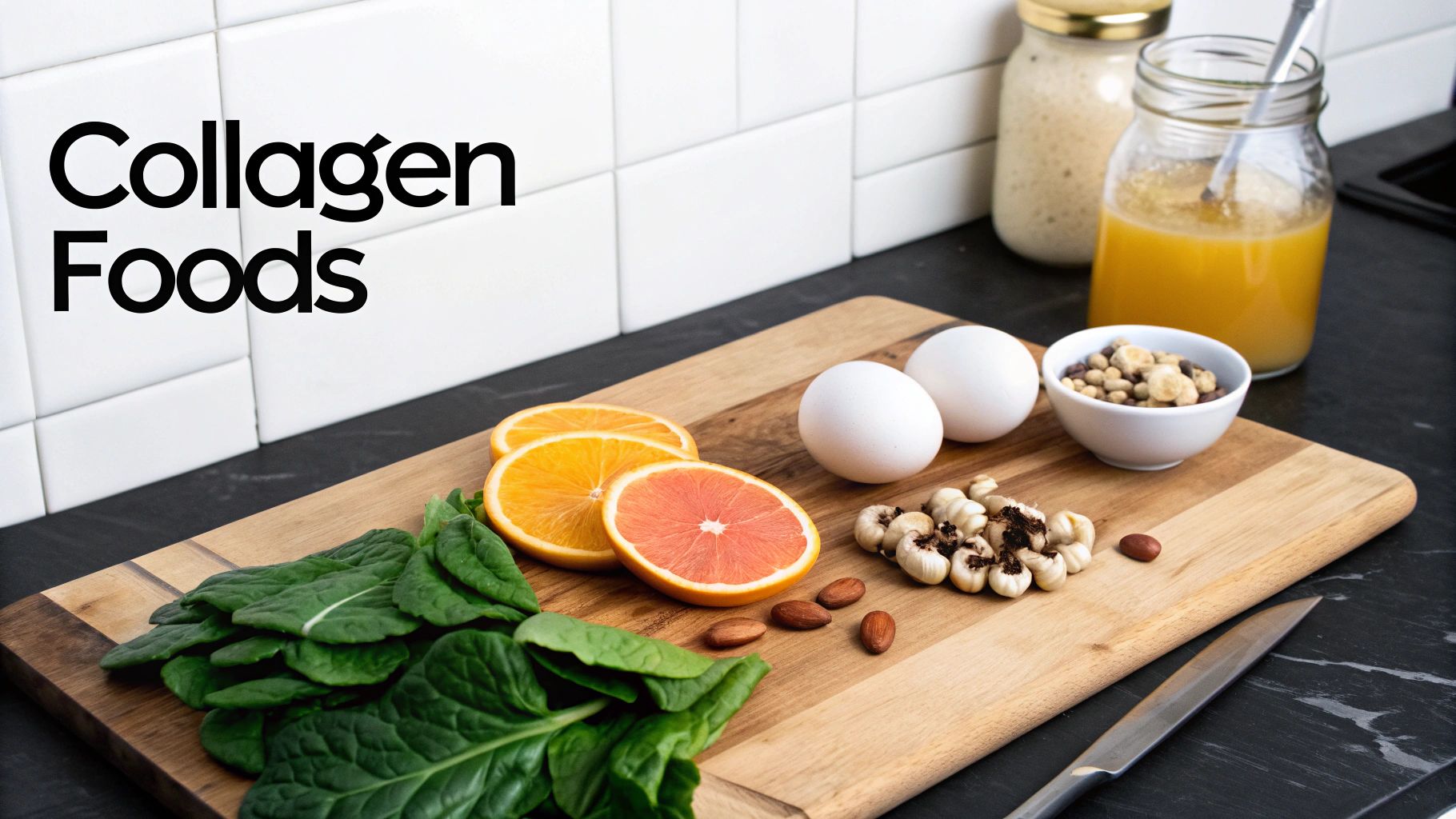
While targeted skincare gives your skin cells a direct command to get to work, the raw materials for building firmer skin actually come from your last meal. Thinking of your diet as the foundation of your skincare routine is the most effective way to learn how to increase collagen naturally. Your body simply can’t synthesise this crucial protein from thin air; it needs a very specific set of nutritional building blocks.
This means we need to move beyond just eating ‘healthy’ and start focusing on the exact nutrients that fuel your internal collagen factory. By strategically adding certain foods to your plate, you give your body the amino acids, vitamins, and minerals it’s crying out for to get on with robust collagen production.
The Essential Amino Acid Blueprint
Collagen is a protein, and just like any other protein, it's built from amino acids. For this particular job, the two most critical are glycine and proline. These are the primary components that twist together to form the strong, triple-helix structure of a collagen fibre.
Without a decent supply of these amino acids, your body's ability to create new collagen is seriously hampered. This is why protein-rich foods are completely non-negotiable for maintaining youthful, resilient skin.
- Bone Broth: A slow-simmered bone broth is a fantastic source because it literally extracts collagen from bones and connective tissues, making glycine and proline highly available to your body.
- Quality Animal Proteins: Lean chicken, grass-fed beef, fish, and eggs are packed with the full range of amino acids your body needs to get the job done.
- Legumes and Tofu: For those on a plant-based diet, sources like soybeans (think tofu and edamame), kidney beans, and lentils provide a really solid amino acid profile.
Meet the Collagen Co-Factors
Amino acids are the bricks, but you need a skilled construction crew to put them all together. This is where collagen co-factors—essential vitamins and minerals—come into the picture. They act as catalysts, kicking off the complex chemical reactions needed for collagen synthesis.
Think of it this way: You can have a pile of premium building materials, but without the workers and their tools, you'll never build the house. Co-factors are the workers and tools for your skin.
The most important players on this team are Vitamin C, zinc, and copper. A deficiency in any one of these can create a major bottleneck in your production line, slowing the whole process down.
Supercharge Production with Vitamin C
Vitamin C is arguably the most critical co-factor of them all. It's directly involved in stabilising the collagen molecule in a process called hydroxylation. Without enough Vitamin C, the collagen your body produces is weaker and more unstable, which makes it prone to breaking down prematurely.
Since your body can't produce or store Vitamin C, a consistent daily intake from your diet is absolutely vital. Try to include some of these vibrant foods in your daily meals:
- Citrus Fruits: Oranges, grapefruit, and lemons are the classic go-to sources.
- Berries: Strawberries, blueberries, and raspberries are loaded with both Vitamin C and protective antioxidants.
- Kiwi Fruit: Just one kiwi can provide a huge chunk of your daily Vitamin C needs.
- Capsicum: Red and yellow capsicums are excellent sources, often containing even more Vitamin C than an orange.
- Leafy Greens: Kale, spinach, and broccoli contribute not only Vitamin C but a host of other skin-loving nutrients too.
The Supporting Roles of Zinc and Copper
While Vitamin C often steals the spotlight, zinc and copper are the true unsung heroes of collagen production. Zinc acts as a co-factor for enzymes needed to synthesise collagen and also helps with skin repair. Copper is essential for activating an enzyme called lysyl oxidase, which is responsible for cross-linking collagen and elastin fibres to give your skin its strength and resilience.
Here’s a quick guide on where to find these crucial minerals:
- Zinc Sources: Oysters are the richest source by far, but you can also find plenty of zinc in lean red meat, poultry, beans, nuts (like cashews and almonds), and seeds (especially pumpkin seeds).
- Copper Sources: Look for copper in shellfish, nuts, seeds, whole grains, and dark leafy greens.
To make things even easier, here's a quick-reference table of the key players and where to find them.
Your Collagen-Boosting Grocery List
| Nutrient/Compound | Role in Collagen Production | Excellent Food Sources |
|---|---|---|
| Amino Acids | The direct building blocks (glycine, proline) of collagen fibres. | Bone broth, chicken, fish, eggs, beef, legumes, tofu. |
| Vitamin C | Essential for stabilising collagen molecules and acting as an antioxidant. | Citrus fruits, berries, kiwi fruit, capsicums, broccoli, kale. |
| Zinc | A co-factor for collagen-synthesising enzymes; supports skin repair. | Oysters, red meat, poultry, beans, nuts, pumpkin seeds. |
| Copper | Activates an enzyme that cross-links collagen and elastin fibres. | Shellfish, nuts, seeds, whole grains, dark leafy greens. |
| Antioxidants | Protect existing collagen from damage caused by free radicals. | Colourful fruits and vegetables (berries, leafy greens), green tea, dark chocolate. |
Keep this list handy next time you're at the shops, and you'll be well on your way to building better skin from the inside out.
Protect Your Investment with Antioxidants
Finally, it’s not enough to just build new collagen; you have to protect what you already have. This is where antioxidants really shine. They act as your skin's personal bodyguards, neutralising the free radicals from UV exposure and pollution that would otherwise break down your existing collagen fibres.
Eating a "rainbow" of colourful fruits and vegetables is the best way to ensure you're getting a wide spectrum of these protective compounds. For even more ideas on how to nourish your skin, explore our guide on the top 20 anti-aging superfoods for women. To give your diet an extra edge, consider integrating the hydrating power of the Tremella mushroom, known as the 'beauty mushroom', into your meals for an added skin-supporting boost.
Lifestyle Habits That Build and Protect Collagen
While a nutrient-dense diet gives your body the raw materials, it's your daily habits that truly decide whether you build up your collagen reserves or actively tear them down. Some of the most powerful strategies for boosting collagen naturally don't come in a bottle; they're the small choices you make every single day.
Think of your collagen like a savings account for your skin's firmness. Your daily routines can either be a steady investment, letting it grow stronger over time, or they can act like constant withdrawals, leaving your account depleted. It's time for an honest look at the habits that either support or sabotage your skin's structural integrity.
Make Sun Protection Non-Negotiable
If there's one golden rule for preserving your collagen, this is it. Sun protection isn't just about preventing a nasty sunburn; it's the single most effective thing you can do to protect your skin's underlying support network. Ultraviolet (UV) radiation is collagen's number one enemy, plain and simple.
UVA rays, in particular, penetrate deep into the dermis. Once there, they trigger destructive enzymes that literally dismantle your existing collagen and elastin fibres. This damage is cumulative and often won't show up for years, but it's happening under the surface. Consistent, daily use of a broad-spectrum SPF 30+ is your non-negotiable first line of defence.
To really get to grips with this, you can learn more about how to repair sun damage with a dermatologist-recommended protocol in our dedicated guide.
Prioritise Restorative 'Beauty Sleep'
The term ‘beauty sleep’ isn’t just some quaint old saying; it’s grounded in hard science. While you're resting, your body kicks into a critical repair and regeneration phase. During deep sleep, your body ramps up its production of Human Growth Hormone (HGH), which plays a huge role in maintaining and repairing tissues—including your skin.
Chronic sleep deprivation keeps your body in a state of stress, flooding it with the hormone cortisol. Elevated cortisol is known to break down collagen and elastin, directly undermining all your hard work to build firmer skin.
Aiming for 7-9 hours of quality sleep a night isn't an indulgence—it’s a fundamental part of any effective anti-ageing strategy. This is prime time for your skin cells to repair the day's damage and build fresh, new collagen.
Boost Circulation with Moderate Exercise
Regular, moderate exercise is fantastic for your skin for one simple reason: circulation. Getting your body moving increases blood flow, which delivers a rush of oxygen and vital nutrients to your skin cells, especially the fibroblasts responsible for making collagen.
This enhanced delivery system not only nourishes your cells but also helps carry away waste products more efficiently. You don't need to run a marathon, either. Activities that get your heart rate up for 30 minutes a few times a week are perfect.
- Brisk walking or jogging
- Cycling
- Yoga or Pilates
- Dancing
This boost in circulation essentially feeds your skin from within, creating the ideal environment for collagen synthesis and overall cellular health.
Avoid the Collagen Killers
Just as important as adding good habits is ditching the bad ones. Three of the biggest culprits in premature collagen degradation are smoking, excess sugar, and chronic stress.
Smoking constricts your blood vessels, effectively choking off the supply of oxygen and nutrients your skin desperately needs. It also unleashes a flood of free radicals that directly attack and destroy precious collagen fibres.
Excess sugar in your diet triggers a process called glycation. This is where sugar molecules latch onto proteins like collagen, forming harmful new molecules called Advanced Glycation End-products (or AGEs). These AGEs make your collagen fibres stiff, brittle, and weak, which leads directly to visible lines and a loss of elasticity.
Finally, just like poor sleep, chronic stress keeps your cortisol levels sky-high. This constant 'fight or flight' state not only breaks down existing collagen but also inhibits your body's ability to produce new, healthy fibres. Finding effective ways to manage stress—whether it's through meditation, exercise, or a hobby—is a direct investment in your skin's youthful future.
Topical Treatments That Actually Stimulate Collagen
While eating well and living a healthy lifestyle builds the foundation for firm skin, the right topical ingredients are what send a direct signal to your skin cells, essentially telling them to start making more collagen.
Applying these powerful actives straight onto your skin means they get to bypass the digestive system and deliver a concentrated dose of instructions right where you need them most. Honestly, this is where you can often see the most dramatic changes in your skin's texture and firmness.
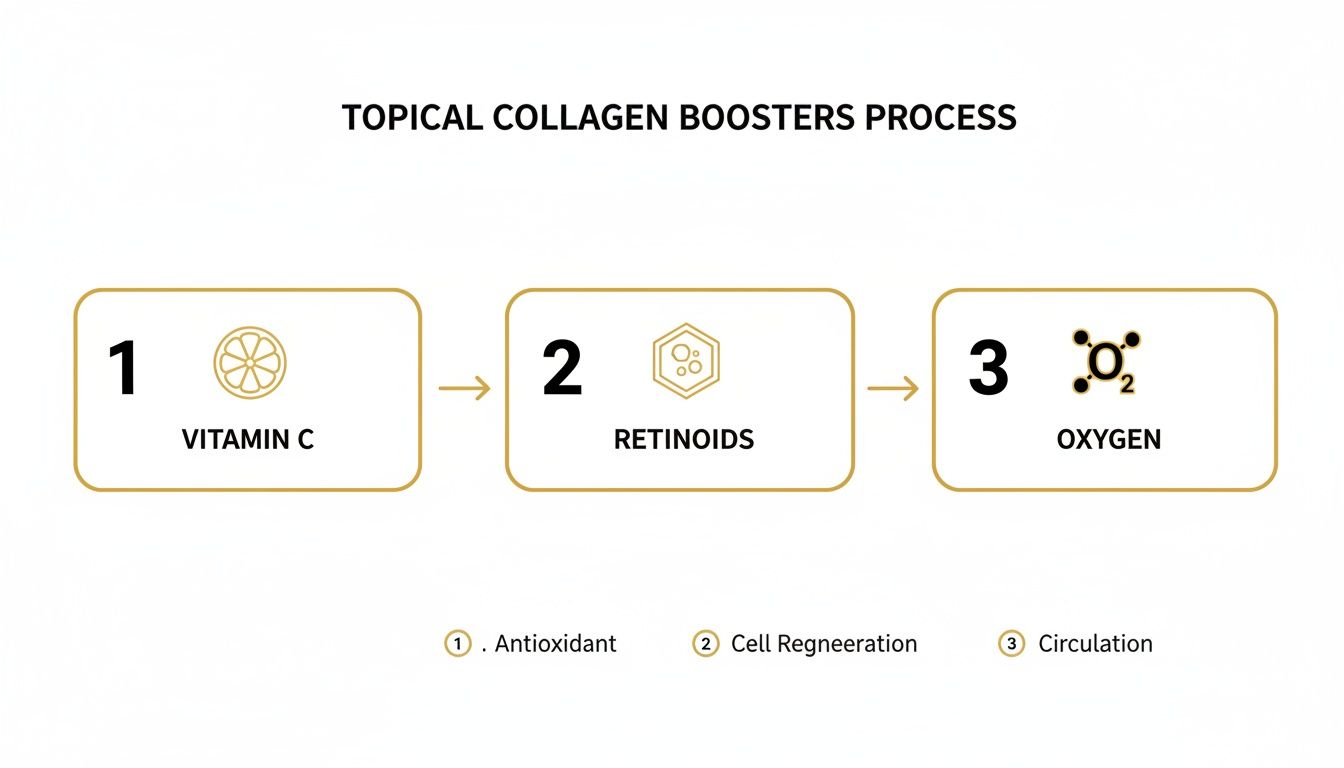
We'll get into the heavy hitters backed by years of solid scientific research, starting with the absolute non-negotiables like Vitamin C and retinoids. Then, I'll introduce you to a truly unique approach exclusive to Karin Herzog: stabilised active oxygen, a method that literally energises your skin from within to make everything else you're doing even more effective.
The Antioxidant Powerhouse: Vitamin C
If there’s one ingredient that belongs in every single collagen-boosting routine, it’s Vitamin C. As we touched on in the diet section, this potent antioxidant is a crucial co-factor for collagen synthesis. Applying it topically makes sure your skin has a high concentration on hand to stabilise newly formed collagen molecules, making them stronger and far more resilient.
But Vitamin C does more than just build; it’s a master protector. It goes to work neutralising the free radicals churned out by UV exposure and pollution before they can get their hands on your existing collagen fibres and break them down. This dual-action approach—building new collagen while protecting the old—is fundamental to achieving results that actually last.
When you're looking for a Vitamin C serum, keep an eye out for stable forms like L-ascorbic acid or tetrahexyldecyl ascorbate for maximum impact. You can learn more about how this and other ingredients work by exploring some of the best anti-aging ingredients available today.
Gold-Standard Renewal with Retinoids
Retinoids, which are all derivatives of Vitamin A, are arguably the most studied and proven topical ingredients for kicking collagen production into high gear. They work by binding to specific receptors in your skin cells, which in turn flips the switch on the genes responsible for creating fresh, new collagen. This process doesn't just increase the amount of collagen, it also helps organise it into a healthier, stronger matrix.
On top of that, retinoids speed up cellular turnover, helping to shed old, dull skin cells and reveal the fresher, smoother skin underneath. It’s this action that helps soften the look of fine lines and dramatically improve your overall skin texture.
There are a few different types you'll come across:
- Retinol: The popular over-the-counter choice that's effective yet generally gentler on the skin.
- Retinaldehyde (Retinal): A step up from retinol, it converts to the active form, retinoic acid, more quickly.
- Tretinoin: A powerful prescription-strength option known for its incredible results but also for its higher potential for irritation.
The best way to get started? Introduce a low-concentration retinol into your routine just a few nights a week and build up from there.
Peptides: The Cellular Messengers
Think of peptides as tiny little text messages that carry instructions to your skin cells. When you apply certain types topically, these signal peptides can tell your fibroblasts—the cells that actually produce collagen—to get to work.
Because they are essentially just fragments of proteins, they are incredibly well-tolerated by most skin types. Adding a peptide-rich serum or moisturiser into your routine can give your skin a gentle but consistent nudge to ramp up its collagen and elastin production, helping to improve firmness over time.
This trend of using targeted topicals is booming. For instance, the Australian marine hydrolysed collagen market is expanding rapidly, especially in personal care. It just shows how savvy Australian customers are getting, embracing ingredients like collagen peptides both topically and internally for a more comprehensive approach.
The Oxygen Advantage: A New Frontier in Collagen Stimulation
Now for something completely different—an approach that creates the perfect energetic environment for all your other ingredients to perform even better. Karin Herzog’s groundbreaking technology uses stabilised active oxygen. When our creams are applied to the skin, this oxygen is released and delivered directly into the dermal layer.
This delivery of pure oxygen acts like a supercharger for your skin cells. It dramatically boosts cellular metabolism, giving your fibroblasts the raw energy they need to churn out new, high-quality collagen and elastin at an accelerated rate.
This isn’t just about adding another ingredient; it’s about optimising the entire cellular environment. By energising the skin from within, this oxygen infusion amplifies the effects of everything else you do. Your Vitamin C becomes more effective, your natural repair processes get a boost, and your skin is simply better equipped to build the strong, resilient support structure it needs to look firm and youthful. It’s a foundational step that makes every other part of your routine work that much harder.
Designing Your Collagen-Boosting Skincare Ritual
Knowing which ingredients work is one thing, but getting real results comes from a consistent, intelligent routine. A well-designed ritual ensures each product works in harmony, layering powerful actives to protect your skin by day and repair it by night.
This isn't about a rigid, 10-step prescription. Think of it as a flexible template that puts the theory of boosting collagen into daily practice. The logic is straightforward: your morning routine is all about protection and prevention, while your evening routine is dedicated to stimulation and repair.
Your Morning Ritual for Protection
Your morning routine has two primary goals: shield your skin from the collagen-degrading effects of UV rays and pollution, and provide the antioxidant support it needs to stay resilient. A simple, three-step approach is all it takes to set your skin up for success.
- Start with an Antioxidant Serum: After cleansing, the first product on your skin should be a potent antioxidant. A Vitamin C serum is the perfect choice here, neutralising free radicals before they have a chance to damage your precious collagen.
- Energise with Oxygen: Next, apply an oxygenating cream like Vita-A-Kombi. This step is crucial. The stabilised oxygen energises your skin cells, creating the perfect environment for them to function optimally and defend against daily stressors. It’s like giving your skin its morning coffee.
- Lock It in with SPF: This final step is absolutely non-negotiable. Applying a broad-spectrum SPF 30 or higher is the single most important thing you can do to protect your existing collagen from the sun's destructive UVA and UVB rays.
This morning sequence ensures your skin is not just protected on the surface but is also metabolically active and ready to face the day.
Your Evening Ritual for Repair
Night-time is when your skin's natural repair mechanisms kick into high gear. Your evening routine should support and amplify this process, focusing on ingredients that stimulate cell turnover and signal new collagen production while you sleep.
Because your skin isn't battling environmental aggressors at night, it can fully focus its energy on rebuilding and regeneration. This is the perfect time to bring in more targeted treatments.
Here’s a sample PM routine that focuses on deep repair:
- Cleanse Thoroughly: Always start by removing makeup, sunscreen, and the day's grime. This creates a clean canvas so your active ingredients can penetrate properly.
- Apply Targeted Treatments: This is where you can incorporate a retinoid a few nights a week to accelerate cell turnover. On alternate nights, a treatment like Oxygen Hyalu'Lift is ideal. Its combination of hyaluronic acid for hydration and active oxygen sends a powerful signal for cellular renewal, helping to plump the skin from within.
- Nourish and Moisturise: Finish with a nourishing moisturiser to support your skin barrier and seal in the active ingredients. For those looking for the perfect final step, you might be interested in our guide on how to choose the perfect collagen-boosting face cream for glowing skin.
Adapting for Sensitive or Acne-Prone Skin
If your skin is sensitive or prone to breakouts, the thought of layering active ingredients can be daunting. The key is to introduce new products slowly and prioritise formulas that won't clog pores.
Karin Herzog's oxygen-based formulas are an excellent choice here. The active oxygen has natural antibacterial properties, which helps to keep pores clear and reduce congestion. Better yet, the formulas are non-comedogenic.
When adding a retinoid, start with the lowest concentration just once or twice a week and slowly build up your tolerance to avoid irritation. By customising this template, you can effectively boost collagen without compromising your skin's comfort.
Your Questions About Boosting Collagen, Answered
Venturing into the world of collagen can bring up a lot of questions. It's completely normal to wonder about what’s realistically achievable, how long it all takes, and whether certain strategies are right for your skin type.
We've gathered some of the most common queries we hear from our Australian clients to give you clear, straightforward answers. This is all about setting the right expectations and helping you move forward with confidence.
How Long Does It Really Take to See a Difference?
Patience is probably the most underrated skincare ingredient. While your skin might feel more hydrated and look a little glowier within a few weeks, the real magic—visible improvements in firmness and elasticity—takes time.
Your body needs a chance to actually synthesise new collagen fibres and weave them into your skin's deep structural layers. It's a biological process that simply can't be rushed. For most people, it takes at least three to six months of dedicated effort to see a noticeable difference. Think of it as a long-term investment in your skin's health, not an overnight fix.
Can You Truly Rebuild Lost Collagen?
This is the big one. While you can't magically turn the clock back to the skin you had at 20, you can absolutely kickstart new collagen production. And just as importantly, you can significantly slow down the breakdown of the collagen you still have.
The goal isn't a complete reversal but a powerful combination of improvement and prevention. By giving your body the right building blocks and your skin the right signals, you can build healthier, stronger, and more resilient skin from exactly where you are today. The aim is to create a visible improvement in firmness and texture while protecting your skin for the future.
The most effective strategy focuses on building new, high-quality collagen while fiercely protecting your existing reserves from environmental damage like UV radiation.
Are These Strategies Safe for Acne-Prone Skin?
This is a huge—and very valid—concern. Many people with acne-prone or congested skin worry that potent "anti-ageing" products will cause breakouts, especially since many traditional formulas are rich and heavy. Choosing the right products makes all the difference.
This is where Karin Herzog's oxygen-based technology truly shines. The formulas are specifically designed to be non-comedogenic, meaning they won't block your pores. Even better, the stabilised active oxygen has natural antibacterial properties. This helps to neutralise blemish-causing bacteria, making it an ideal choice for anyone who wants to boost collagen without sacrificing clarity.
For other powerful ingredients like retinoids, the key is always to start low and go slow. A low concentration just a few nights a week will help your skin acclimatise without causing irritation or purging.
Do Collagen Supplements Actually Work?
The supplement aisle is overflowing with collagen powders and pills, but what does the science say? Research into hydrolysed collagen peptides—small, easily absorbed fragments of collagen—is certainly promising, with some studies suggesting they can improve skin hydration and elasticity.
However, this guide is focused on the most proven and holistic approach: empowering your body to make its own collagen. By providing the essential amino acids, vitamins, and minerals through your diet and stimulating your skin directly with powerful topicals, you give your body everything it needs to build its own strong, healthy collagen matrix from the ground up.
Ready to energise your skin and kickstart its natural collagen production? Explore the science-backed, oxygen-powered skincare from Karin Herzog and discover a Swiss approach to visible, lasting results. Shop the collection now.