
If you're serious about boosting collagen naturally, the secret isn't one magic potion. It's about creating a powerful framework of simple, consistent habits. Focus on a diet packed with vitamin C, amino acids, and antioxidants, make daily sun protection non-negotiable, and use targeted skincare with proven ingredients like retinoids and peptides. This combination is what truly stimulates your body’s own collagen production for firmer, healthier skin.
Understanding Your Skin's Foundation
Think of collagen as the scaffolding that gives your skin its structure, firmness, and bounce. It's the most abundant protein in your body and the primary building block for your skin, bones, and connective tissues. But here's the catch: from our mid-20s, our natural production of this vital protein begins to slow down by about 1% each year.
This gradual decline is a key reason we start seeing the classic signs of ageing—fine lines, wrinkles, and a general loss of facial volume. But it's not just the clock ticking that's to blame. Several external factors can put this process into overdrive:
- Sun Exposure: UV radiation is, without a doubt, the number one enemy of collagen. It unleashes oxidative stress that actively breaks down those precious protein fibres. You can learn more about how to repair sun damage in our comprehensive guide.
- Lifestyle Choices: Things like a high-sugar diet, smoking, or even chronic stress can degrade the collagen you already have and make it harder for your body to produce new, healthy fibres.
- Environmental Pollutants: Free radicals from pollution are another major contributor, chipping away at your skin's structural support system day after day.
Before we dive into the specific actions you can take, let's look at the big picture. Naturally boosting collagen isn't about a single supplement or cream; it's a holistic strategy that addresses both protection and production.
Key Pillars of Natural Collagen Boosting
| Strategy Area | Primary Goal | Key Actions |
|---|---|---|
| Diet & Nutrition | Provide Building Blocks | Consume vitamin C, amino acids (from protein), and antioxidants. |
| Lifestyle Habits | Protect Existing Collagen | Prioritise sleep, manage stress, and avoid smoking/excess sugar. |
| Sun Protection | Prevent Collagen Breakdown | Apply broad-spectrum SPF 30+ daily, without fail. |
| Targeted Skincare | Stimulate New Production | Use ingredients like retinoids, peptides, and oxygen technology. |
This table gives you a clear roadmap. Each pillar supports the others, creating a powerful synergy that delivers visible, long-term results.
The good news in all of this? You have a huge amount of control over this process. Once you understand what helps and what harms your collagen, you can build a proactive strategy that not only preserves what you have but actively encourages new production.
This shift in thinking is why so many Australians are now investing in their skin's long-term health. The Australian collagen market was valued at USD 211.71 million in 2024 and is projected to grow significantly, all fuelled by a desire for effective, science-backed anti-ageing solutions. Knowing how to boost collagen naturally has moved beyond just skincare—it’s now a core part of a holistic approach to wellbeing.
Nourish Your Skin with a Collagen-Boosting Diet

What you put on your plate is just as important as what you put on your skin. To boost collagen naturally, your body needs a steady supply of specific nutrients—the raw materials required to build and maintain this crucial protein. It’s all about being strategic with your food choices to give your skin’s cellular machinery exactly what it needs to thrive.
Think of it like building a house. You need bricks, mortar, and a crew to put it all together. For your skin, the "bricks" are amino acids, the "mortar" is vitamin C, and the "crew" are minerals like zinc and copper. Without all these pieces in place, production slows right down, and the whole structure weakens.
The Essential Amino Acid Building Blocks
Collagen is constructed primarily from three specific amino acids: glycine, proline, and hydroxyproline. When you provide your body with these directly, you're supporting the entire synthesis process from the ground up. And your diet is the absolute best place to source them.
A fantastic way to get a concentrated dose is through bone broth. It’s naturally rich in these amino acids and other compounds that support joint and skin health. If you're curious about how it works, you can explore the science-backed bone broth collagen benefits to learn more.
Other excellent protein-rich sources include:
- Lean Meats: Chicken and turkey are packed with the necessary amino acids.
- Fish: Particularly species rich in omega-3s like salmon, which also helps fight inflammation.
- Eggs: The whites are especially high in proline.
Cofactors and Protective Nutrients
Beyond the core amino acids, several other micronutrients are non-negotiable for robust collagen production. They act as essential helpers in the biological process and, just as importantly, shield the collagen you already have from damage.
Vitamin C is the undisputed champion here. Your body literally cannot synthesise collagen without it. It acts as a critical cofactor, switching on the enzymes responsible for forming strong, stable collagen fibres.
A deficiency in Vitamin C directly impairs your body's ability to create new collagen, which is why a diet lacking in this nutrient can lead to weaker skin and slower wound healing. Making it a daily priority is one of the most effective dietary changes you can make.
Try to incorporate these powerful sources into your daily meals:
- Citrus Fruits: Oranges, grapefruit, and lemons are classic choices for a reason.
- Berries: Strawberries and blueberries are not only rich in vitamin C but also packed with skin-protecting antioxidants.
- Leafy Greens: Kale and spinach provide a dual benefit of vitamin C and other skin-loving nutrients. You can find more inspiration in our list of the top anti-aging superfoods for women.
- Bell Peppers: A single red bell pepper contains more than 150% of your daily vitamin C requirement!
Finally, don't forget essential minerals. Zinc, found in shellfish, legumes, and seeds, helps activate the proteins needed for collagen synthesis. Copper, present in nuts and dark leafy greens, also plays a key role in linking collagen and elastin fibres together, ensuring your skin remains both firm and flexible.
Lifestyle Habits That Support Your Collagen

While a nutrient-rich diet gives you the raw materials for collagen, it's your daily habits that truly decide how well you hold onto this precious protein. The smartest way to boost your collagen levels naturally is to stop it from breaking down in the first place. Simple, consistent lifestyle choices can make an incredible difference.
Think of your skin's collagen network as a delicate fabric. Certain habits—like too much sun or too little sleep—wear it down, causing it to fray and thin over time. By consciously avoiding these stressors and embracing protective routines, you’re preserving your skin’s structural integrity for years to come.
Make Sun Protection Your Top Priority
If there's one villain in the collagen story, it's the sun. Sun exposure is the single biggest cause of collagen degradation, hands down. UVA rays penetrate deep into the dermis, where they unleash enzymes that actively chew up your collagen fibres. This is why daily, diligent sun protection isn't just a suggestion—it's the most critical step in any anti-ageing strategy.
You need to be wearing a broad-spectrum sunscreen with at least SPF 30+ every single day. Rain or shine, indoors or out. Shockingly, studies show that most people only apply 20-50% of the amount they actually need, which drastically cuts its effectiveness. Make it a non-negotiable part of your morning routine, just like brushing your teeth.
Here in sunny Australia, with some of the world's highest skin cancer rates, this is even more crucial. Combining diligent sun protection with a healthy diet is a powerful two-pronged attack. In fact, Australian university trials have shown that consuming 15g of hydrolysed collagen peptides daily can increase skin elasticity by 10% after just eight weeks. This perfectly showcases how internal and external habits work together for the best results.
Prioritise Rest and Manage Stress
Your body’s most important repair work happens while you’re asleep. During the deep sleep cycles, your system releases growth hormones that help rebuild and repair tissues, including your skin's vital collagen matrix. When you skimp on sleep, you're literally short-circuiting this essential regeneration process.
Chronic stress is just as destructive. High levels of the stress hormone, cortisol, have been proven to break down both collagen and elastin. Finding healthy ways to manage your stress is a genuine investment in your skin's future.
Cortisol puts your body in a constant state of "fight or flight," diverting resources away from long-term maintenance projects like collagen synthesis. When you manage your stress, you allow your body to shift back into its natural repair and renewal mode.
Move Your Body for Better Circulation
Moderate, consistent exercise offers incredible benefits for your skin that go far beyond stress reduction. It boosts your blood circulation, delivering a fresh supply of oxygen and essential nutrients directly to your skin cells. This creates the perfect environment for your fibroblasts—the little factories that produce collagen—to do their best work.
A brisk walk, a yoga session, or a light jog are all fantastic. The goal isn’t gruelling, high-intensity workouts, but rather consistent movement that gets your heart pumping. You can learn more about how physical activity benefits your skin in our guide on the best exercise for anti-ageing. Ultimately, it’s about creating a supportive internal environment where your skin cells have everything they need to thrive.
Build an Advanced Skincare Routine for Collagen Production
While your diet and lifestyle are busy building collagen from the inside out, a smart skincare routine offers direct, topical support right where you want it. This isn't about some complicated ten-step process. It's about using the right ingredients, consistently, to give your skin cells the right signals.
It all starts with a gentle cleanse. You need to prep the skin by clearing away impurities and excess oil, but you can't strip its natural protective barrier. Using a cleanser that's too harsh will only lead to inflammation, which is the exact opposite of what you want for healthy collagen synthesis.
Introduce Proven Collagen-Boosting Actives
Once your skin is clean and ready, it's time to bring in the heavy hitters. A handful of active ingredients have decades of solid science backing their ability to stimulate fibroblasts—the little factories in your skin responsible for creating new collagen. If you're looking into topical options, understanding what a good collagen for face serum can do is a great place to start.
The most proven ingredients you should look for include:
- Retinoids: Often called the gold standard in anti-ageing, ingredients like retinol and retinaldehyde work by speeding up skin cell turnover and essentially telling your cells to get busy making more collagen.
- Peptides: Think of these as little messengers. They're short chains of amino acids that send specific signals. Some tell the skin to create collagen, while others can even help relax the muscles that cause expression lines.
- Gentle Exfoliants: Alpha-hydroxy acids (AHAs) like glycolic and lactic acid are fantastic for dissolving the ‘glue’ holding dead skin cells on the surface. This doesn't just make your skin look brighter; it also kicks off a small regenerative response, encouraging new, healthy cell growth.
The real secret to using these powerful ingredients is to introduce them slowly. Start with a low concentration just a few nights a week, and then gradually build up as your skin gets used to it. This approach minimises any potential irritation and lets your skin reap all the rewards.
To get a better handle on how these ingredients work together, you can explore our guide on active ingredients in skincare and learn how to layer them for the best results.
Energise Your Skin with Oxygen Technology
For a truly next-level approach, you want to create the perfect cellular environment for these active ingredients to do their best work. This is exactly where oxygen technology comes into play. When stabilised oxygen is delivered just beneath the skin's surface, it gives your cellular metabolism a serious energy boost.
Imagine giving your fibroblast cells a direct shot of energy. This renewed vitality helps them work much more efficiently, supercharging their ability to produce healthy, new collagen and elastin in response to ingredients like retinoids and peptides. You end up with a powerful synergistic effect that goes far beyond what any single ingredient could achieve on its own.
A great example of this synergy is combining proven botanicals with advanced delivery systems. A CSIRO study, for instance, found that daily aloe vera gel application boosts collagen types I and III by 25% over 90 days. You can amplify that kind of natural power with a product like Karin Herzog's Essential Mask. It uses oxygen therapy—a technology backed by Swiss research since 1965—to refine skin texture and stimulate elastin, creating the ideal environment for total skin rejuvenation.
Your Daily Plan for Lasting Results
Knowing what works is one thing, but piecing it all together into a daily routine is what truly creates visible change. Consistency really is the secret ingredient that turns knowledge into firmer, healthier-looking skin.
Think of this plan less as a rigid set of rules and more as a flexible framework. It’s about integrating small, sustainable collagen-boosting habits into your life, not a massive overhaul overnight. A balanced meal, a moment for skincare, a brisk walk—each choice is another investment in your skin's future.
Your Sample Collagen-Boosting Day
Let's walk through what a typical day could look like, weaving together the diet, lifestyle, and skincare strategies we've covered.
- Morning (7 AM): Before you do anything else, start with a large glass of water. For breakfast, a smoothie is a fantastic option. Try blending spinach (vitamin C), berries (antioxidants), and a scoop of protein powder to get those essential amino acids your body needs to build collagen.
- Mid-Morning (10 AM): If you're feeling peckish, grab a handful of almonds and an orange. This simple snack is a powerhouse combo, delivering copper from the nuts and a big hit of vitamin C from the fruit—both critical for collagen synthesis.
- Lunch (1 PM): A big salad topped with grilled salmon is an ideal choice. The salmon provides protein and anti-inflammatory omega-3s, while a colourful mix of leafy greens and capsicum loads you up on antioxidants and even more vitamin C.
- Afternoon (4 PM): Step outside for a brisk 15-minute walk. This little break does wonders for managing stress and lowering cortisol, but it also boosts circulation, delivering a fresh supply of oxygen and nutrients right to your skin cells.
- Dinner (7 PM): A warm bowl of lentil soup or a chicken stir-fry packed with broccoli and shiitake mushrooms is perfect. This kind of meal provides the protein, zinc, and copper your skin needs for its overnight repair cycle.
- Evening (9 PM): Start your wind-down routine. Dim the lights, put away your screens, and take a few minutes for your evening skincare. This is a powerful signal to your body that it’s time to rest and shift into that crucial regenerative mode.
This simple skincare timeline shows you the core steps for morning and evening, focusing on that essential sequence of cleansing, treating, and moisturising.
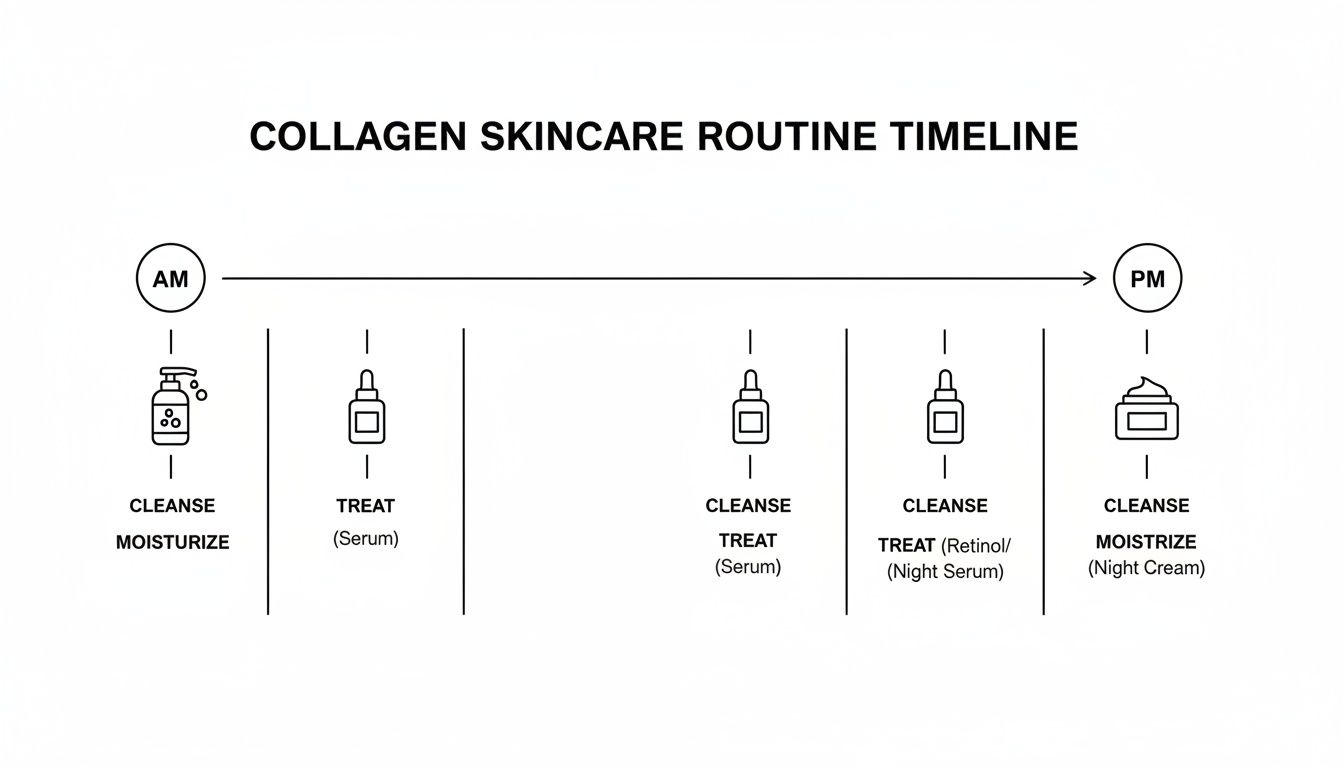
The key takeaway here is consistency. Your morning routine is all about protecting your skin for the day ahead, while your evening routine delivers the active ingredients it needs to repair and stimulate collagen while you sleep.
When Will You See Results
This is the big question, and the honest answer is: it depends. Naturally boosting collagen is a long game, not a quick fix. You’re supporting your body's own biological processes, and that just takes time.
While you might notice your skin looks more hydrated and radiant within a few weeks, visible changes in firmness and elasticity typically take at least 3 to 6 months of consistent effort. Patience and persistence are your greatest allies.
A great tip is to track your progress with photos. Taking a picture in the same spot with the same lighting once a month can reveal subtle improvements you might otherwise miss. Just remember, every healthy meal and every good night's sleep is an investment in your skin’s long-term health.
Your Collagen Questions, Answered
Navigating the world of collagen can bring up a lot of questions. From supplements to dietary specifics, it’s easy to feel overwhelmed when you’re trying to do the right thing for your skin.
We get these queries all the time, so let's break down some of the most common ones to give you clear, practical answers for your journey toward firmer, healthier skin.
Are Collagen Supplements Actually Effective for Skin?
This is one of the most debated topics in skincare, and the evidence is looking very promising. Yes, many studies suggest that high-quality, hydrolysed collagen peptides can be effective. When you ingest them, your digestive system breaks them down into amino acids and smaller peptide chains.
These are then absorbed into your bloodstream and travel throughout your body, including to your skin. Once there, they act as signalling molecules, essentially telling your fibroblast cells to ramp up production of new collagen and other key components like hyaluronic acid.
For instance, research, including trials right here in Australia, has shown that a daily intake of 10-15g can lead to measurable improvements. Participants often see increased skin hydration, better elasticity, and a reduction in wrinkle depth after 8-12 weeks of consistent use. The key is choosing a bioavailable source, like marine or bovine peptides, and being patient enough to see the results.
Can I Boost Collagen on a Vegan Diet?
Absolutely. While you can't consume collagen directly on a plant-based diet, you can give your body every single building block it needs to synthesise its own. The strategy is to focus on providing the essential amino acids and the vital cofactors that drive the entire process.
Your diet should be rich in plant-based proteins that offer a complete amino acid profile.
- Amino Acids: Focus on foods like tofu, tempeh, lentils, chickpeas, quinoa, and pumpkin seeds to get plenty of proline and glycine.
- Vitamin C: This is non-negotiable for collagen synthesis. Load up on citrus fruits, berries, kiwi, capsicum, and dark leafy greens like kale.
- Zinc and Copper: Don't forget these essential minerals. Nuts, seeds, and legumes are fantastic sources that help in collagen formation.
A well-structured vegan diet isn't a barrier to healthy collagen levels. By supplying all the necessary nutrients, you can effectively support your body’s natural production pathways without any compromise.
At What Age Should I Start Focusing on Collagen?
The best time to start thinking about collagen is well before you see major changes in your skin. Our natural collagen production begins its slow decline in our mid-to-late 20s, decreasing by about 1% each year.
While the visible effects aren't immediate, this is the perfect time to shift into a preventative mindset. You don't need an intensive routine, but establishing foundational habits is key. This is as simple as wearing broad-spectrum sunscreen daily, eating an antioxidant-rich diet, and using a good vitamin C serum.
By your 30s and 40s, the focus shifts more towards active stimulation to counteract that natural decline. This is when introducing more powerful ingredients like retinoids, peptides, and advanced treatments like oxygen-based therapies can make a significant difference in maintaining your skin's firmness and structure.
Ready to energise your skin's natural renewal process? Discover how Karin Herzog's patented oxygen technology can create the ideal environment for collagen and elastin production, delivering visible, science-backed results. Explore our Swiss skincare collection today.