
So, can you really use retinol and vitamin C together? The short answer is a resounding yes, but the secret lies in when you use them. Think of this powerhouse duo as your ultimate tag team for glowing, healthy-looking skin—Vitamin C is your daytime defender, while retinol steps in at night to repair and renew.
Your Guide to This Skincare Power Couple

Welcome to your go-to guide for combining two of skincare's most celebrated ingredients. Diving into the world of actives can feel a bit overwhelming, but getting a handle on how they work together is the first step towards seeing incredible results. This is where we clear up the confusion and demystify the science behind this popular pairing.
We'll break down exactly why this combination is so brilliant at tackling common skin concerns like fine lines, sun damage, and a lacklustre complexion. You'll walk away with a clear understanding of what each ingredient does, get the real story behind common myths, and receive practical advice you can actually use to build a safe and effective routine.
What You Will Learn
This guide is designed to build your knowledge from the ground up, starting with the basics and moving on to more advanced tips. Our goal is to give you the confidence to use these ingredients like a pro.
- Individual Roles: We'll dive into the specific jobs of vitamin C (your antioxidant protector) and retinol (your cell renewal expert).
- Safe Layering Techniques: You’ll learn the gold-standard method for fitting both into your daily routine without risking irritation.
- Enhanced Results: Discover how specialised formulas, like oxygen-based skincare, can complement and boost the effects of your retinol and vitamin C products.
By the end, you'll know exactly how to harness their combined power for skin that looks and feels rejuvenated. For a deeper look into how different compounds work, learn more about the role of active ingredients in skincare in our detailed article. We’re here to give you the insights you need to build a routine that truly delivers.
Understanding Vitamin C: Your Daytime Defender

If retinol is the diligent renovator working the night shift, think of Vitamin C as your skin's loyal daytime bodyguard. Its primary mission? To protect you from the daily onslaught of environmental aggressors like UV radiation, pollution, and even blue light from our screens.
Every day, these stressors create unstable molecules called free radicals. It helps to picture them as tiny thieves that zip around stealing energy from our healthy skin cells. This constant thievery leads to cellular damage, inflammation, and the breakdown of precious collagen, which is what really accelerates the signs of ageing.
This is where Vitamin C steps in. It swoops in to neutralise these free radicals before they can cause any real harm.
Applying it every morning is the gold standard for a reason. It creates a protective reservoir that bolsters your sunscreen’s efforts. While SPF is non-negotiable for blocking UV rays, Vitamin C works from within to mop up the free radical damage that still manages to sneak through. Together, they form the ultimate defensive partnership for healthy, resilient skin.
The Brightening and Firming Powerhouse
Beyond its bodyguard duties, Vitamin C is a celebrated multi-tasker, famous for bringing back radiance and firmness to tired, lacklustre skin. It tackles skin concerns on several fronts, making it a worthy addition to just about any skincare routine.
One of its most sought-after benefits is its sheer power to brighten the complexion. It does this by putting the brakes on tyrosinase, an enzyme responsible for producing melanin (the pigment that causes dark spots). This action helps to:
- Fade dark spots and hyperpigmentation, leading to a much more uniform skin tone.
- Reduce those stubborn post-inflammatory marks left behind by blemishes.
- Restore an overall luminous glow that makes skin look healthy and alive.
This brightening magic is a big reason why Vitamin C, particularly in its ascorbic acid form, is one of the most-searched skincare ingredients on the planet. It’s especially popular here in Australia for reviving sun-exposed skin, where environmental factors can cause up to 90% of photoageing. Local skincare experts often highlight its effectiveness and low irritation potential at 10-20% concentrations, making it a true national favourite. You can dive deeper into its global popularity in these skincare ingredient trends on Cosmetics Business.
Key Takeaway: Using Vitamin C every morning under your sunscreen is like giving your skin a shield. It defends against daily damage while actively working to brighten your complexion and even out your skin tone for a visible glow.
But that's not all. Vitamin C also plays a vital role in synthesising new collagen—the protein that gives our skin its structural support and bouncy feel. By stimulating collagen production, it helps keep your skin firm, plump, and resilient, which in turn reduces the appearance of fine lines and wrinkles over time.
This dual-action of protection and correction is precisely what makes the combination of retinol and Vitamin C so incredibly effective. They really are the dream team.
Understanding Retinol: Your Nighttime Renovator
While Vitamin C is your daytime shield, retinol is the master renovator that gets to work while you sleep. This powerful Vitamin A derivative is celebrated for its ability to fundamentally change how skin behaves, encouraging a fresher, smoother, and more youthful appearance from the inside out.
Think of it as hitting the ‘factory reset’ button on your skin cells. Retinol binds to receptors inside the cells and issues new commands, essentially telling them to act like they did when they were younger and healthier. This kicks cellular turnover into high gear—that’s the natural cycle where old, dull skin cells are shed to make way for fresh new ones.
This accelerated renewal process creates a ripple effect, improving your skin’s overall health and appearance in some pretty amazing ways.
The Architect of Smoother Skin
At its core, retinol’s main job is to kickstart regeneration, leading to a whole host of visible improvements. By speeding up the shedding of that outermost layer of dead skin, it helps to visibly refine your complexion and tackle multiple concerns at once.
Here’s what that looks like in practice:
- Diminishing Fine Lines: Faster cell turnover means smoother skin is revealed more quickly, softening the appearance of wrinkles over time.
- Unclogging Pores: By stopping dead cells from building up and causing blockages, retinol is a fantastic tool for managing breakouts and congestion.
- Refining Texture: This constant renewal cycle leads to a noticeably smoother and more even skin surface. You can literally feel the difference.
Key Takeaway: Retinol works overnight to accelerate your skin's natural renewal cycle. This "renovation" process helps to smooth texture, clear out congestion, and reduce the visible signs of ageing for a revitalised complexion.
But retinol’s magic doesn’t stop at the surface. It also dives deeper to fire up collagen synthesis. Collagen is the essential protein that gives skin its structure and firmness—the scaffolding that holds everything up. As we age, our natural collagen production slows right down, but retinol gives it a nudge, helping to maintain that plump, firm, and elastic feel. It’s no wonder so many experts consider it one of the best anti-ageing ingredients available.
Here in Australia, where intense sun exposure is a massive factor in premature ageing, retinol has become a non-negotiable for anyone serious about their skin. Dermatologists agree that its power to boost cell turnover and rebuild collagen is perfectly suited for tackling sun damage, which can be responsible for up to 80% of the visible signs of ageing. You can find more insights on this from Australian skincare experts who see the effects firsthand.
Of course, all this powerful activity comes with a small catch. Retinol can cause some initial irritation, redness, and peeling as your skin gets used to it—a phase often called ‘retinisation’. It also makes your skin more sensitive to the sun, which means daily, high-SPF sunscreen is absolutely essential. The best way to start is slow and steady. Apply a low-concentration product just two or three nights a week, then gradually increase how often you use it as your skin builds tolerance. This smart approach ensures you get all the incredible benefits without overwhelming your skin.
How To Layer Retinol And Vitamin C For Best Results
Alright, this is the million-dollar question: how do you actually use these two skincare superstars in the same routine without causing a complete meltdown on your face? The answer is surprisingly simple, and it all comes down to one core idea: divide and conquer.
The universally recommended method—the one dermatologists and skin experts swear by—is to split them up between your morning and evening routines. This isn't just about preventing irritation; it's about giving each ingredient the perfect environment to do its best work. Think of it like putting your best players in their strongest positions to win the game.
The AM/PM Split: Your Gold Standard Routine
The smartest way to layer retinol and vitamin C is to keep them separate. Vitamin C is a morning hero, while retinol does its best work overnight. This simple strategy ensures you get the full protective and reparative benefits without overwhelming your skin.
Here’s a breakdown of how this highly effective routine looks in practice:
- Morning (AM) Routine: After cleansing, apply your Vitamin C serum. Its main job is to act as an antioxidant shield, protecting your skin from UV rays and pollution throughout the day. Always follow up with a good moisturiser and—this is non-negotiable—a broad-spectrum SPF 30 or higher.
- Evening (PM) Routine: Use your retinol product at night on clean, dry skin. The evening is when your skin's natural repair cycle kicks into high gear, and retinol works in sync with this process to speed up cell renewal and build new collagen. To really understand the magic of nighttime repair, check out our guide on why your night skincare routine matters so much.
This is a great visual of how retinol gets to work renovating your skin from the inside out.

As you can see, retinol’s power lies in its multi-step process, starting with clearing out old cells to eventually reveal clearer, firmer skin.
Why This Method Just Works
Separating these two powerhouse ingredients is the secret sauce for a few key reasons. Vitamin C is happiest and most effective at a low pH, whereas retinol prefers a more neutral pH to work properly. Using them at different times of the day means each one can perform at its absolute peak without interference.
Plus, since retinol makes your skin more sensitive to the sun, applying it at night is simply the safest, smartest move.
This AM/PM split is especially important here in Australia, where UV-induced damage is one of our biggest skin concerns. Local experts agree this approach gives you the best of both worlds. For instance, retinol can accelerate cell turnover by 20-50% to smooth out fine lines, while Vitamin C can inhibit melanin production by up to 30% to tackle dark spots and brighten the skin.
Pro Tip: Whenever you're introducing potent actives like these, hydration is your best friend. To head off any potential dryness and keep your skin barrier strong and happy, it's a great idea to bring a deeply nourishing serum into the mix, like a Pro Moisturizing Serum.
To give you a clear, actionable plan, here’s a simple table to guide your daily applications.
Your Daily Retinol and Vitamin C Routine
This step-by-step guide shows you exactly when and how to apply each product for maximum benefit and minimal irritation.
| Time of Day | Step | Product | Purpose |
|---|---|---|---|
| Morning | 1. Cleanse | Gentle Cleanser | Remove impurities without stripping the skin. |
| 2. Treat | Vitamin C Serum | Provide antioxidant protection and brighten skin tone. | |
| 3. Hydrate | Moisturiser | Lock in hydration and support the skin barrier. | |
| 4. Protect | Broad-Spectrum SPF 30+ | Shield skin from UV damage (the most critical step). | |
| Evening | 1. Cleanse | Gentle Cleanser | Remove makeup, SPF, and daily grime. |
| 2. Treat | Retinol Serum/Cream | Stimulate cell turnover, boost collagen, and refine texture. | |
| 3. Hydrate | Nourishing Moisturiser | Soothe skin, replenish moisture, and minimise potential irritation. |
While some seasoned skincare users might alternate these ingredients on different nights, the AM/PM split is hands-down the safest and most effective strategy for most of us. It provides a reliable, consistent framework for achieving that radiant, healthy skin you’re after, without the guesswork or the risk of a reaction. By giving each active its own time to shine, you truly get the best of both worlds.
Enhancing Your Routine with Karin Herzog Skincare
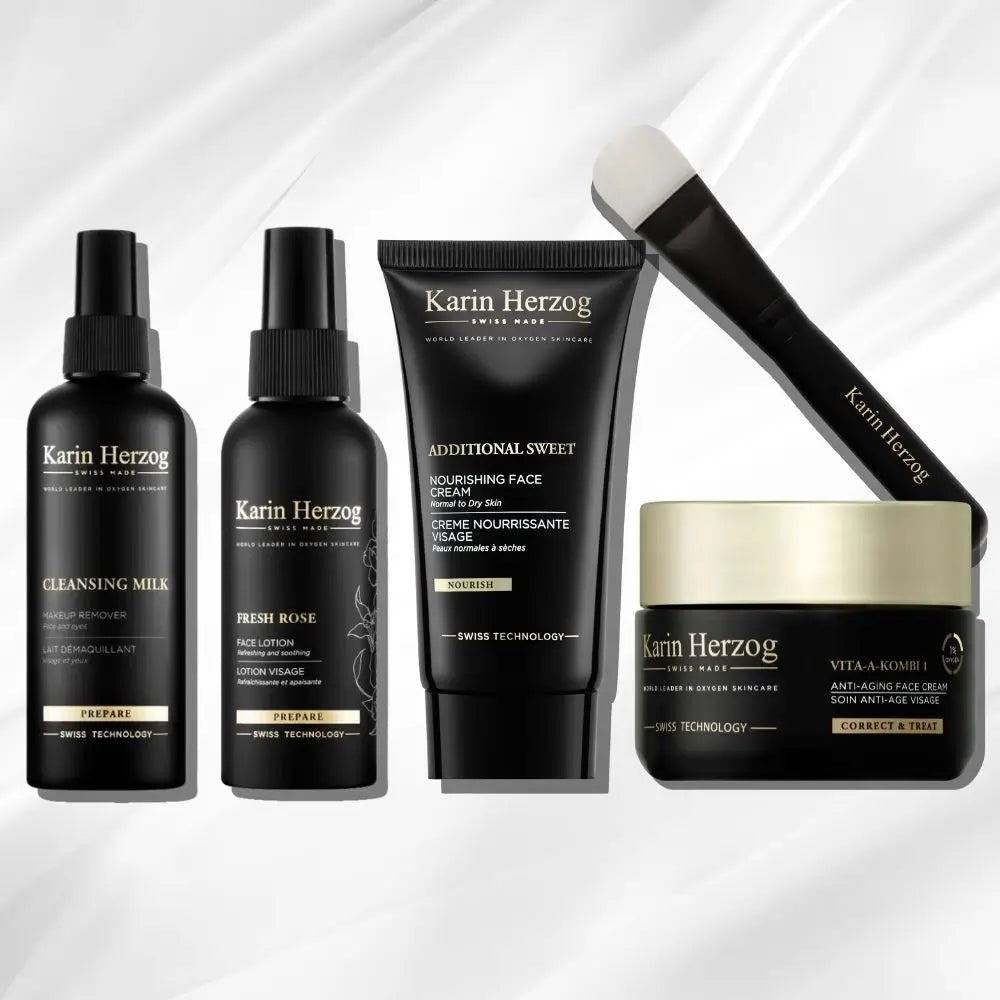
While a well-structured retinol and vitamin c routine is powerful on its own, you can take your results to the next level by bringing in specialised formulas designed to amplify performance. This is where Karin Herzog's patented oxygen technology makes all the difference, working in perfect synergy with your core actives.
Think of your skin cells like tiny engines. For them to do their job properly—repairing damage, producing fresh collagen—they need energy. Stabilised oxygen acts as the fuel for these cellular engines, energising them and making them far more receptive to other powerful ingredients.
In short, it means the retinol and vitamin C you’re already applying can get to work more efficiently, leading to better, faster results.
Your Oxygen-Infused Skincare Allies
Weaving oxygen technology into your routine is surprisingly simple. It doesn’t replace what you’re doing; it complements it by preparing, soothing, and hydrating the skin to create the perfect environment for your actives to do their best work.
-
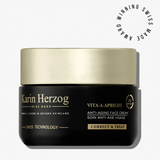
For Gentle Renewal: The Vita-A-Kombi 1 cream is the ideal starting point for anyone new to vitamin A. It cleverly combines a gentle form of retinol with active oxygen, which helps kickstart cellular renewal while minimising the potential for irritation that often comes with traditional retinoids.
-
For Soothing Hydration: Let's be honest, potent actives can sometimes leave your skin feeling a little dry or sensitive. The Essential Mask is your go-to for an instant calming effect. It delivers a surge of moisture to cool redness and strengthen the skin's barrier, making it an indispensable companion to your routine.
By delivering a payload of stabilised oxygen directly to the skin, Karin Herzog products don't just add another step—they amplify the effectiveness of your entire regimen, ensuring every ingredient works harder for you.
Maximising Hydration for Optimal Results
Proper hydration isn't just nice to have; it's non-negotiable when you're using actives. Retinol, in particular, can be drying, and well-hydrated skin simply functions better on every level. The Oxygen Hyalu'Lift serum provides multi-level hydration, pulling moisture deep into the skin to keep it looking plump, feeling comfortable, and staying resilient.
Beyond your daily serums, consider how specialised treatments like a Hyaluronic Collagen Mask Enhancement can further boost your skin's vitality. By pairing these smart, supportive products with your core retinol and vitamin c schedule, you create a complete system that looks after your skin's health from every angle. For a perfectly curated regimen designed to protect and energise your skin from the get-go, explore our Morning Routine Kit.
Common Questions About Retinol and Vitamin C
Diving into the world of active ingredients like retinol and vitamin C naturally brings up a few questions. To help you feel completely confident layering these powerhouses into your routine, we’ve put together some clear, straightforward answers to the queries we hear most often.
Can I Use Both at the Same Time?
While some newer, specially-designed formulas allow for simultaneous use, the gold standard advice from dermatologists is still to separate them. This isn't just about preventing irritation; it's about getting the absolute best out of each ingredient.
Think of it this way: use your Vitamin C serum in the morning. Its job is to act as a shield, defending your skin against the environmental damage you face during the day. Then, at night, let retinol take over. Retinol makes your skin more sensitive to sunlight, and the evening is when your skin’s natural repair and renewal cycles kick into high gear, making it the perfect time for an ingredient that works on regeneration.
How Long Until I See Results?
This is where patience and consistency really pay off. With Vitamin C, you'll likely notice a brighter, more luminous complexion within a few weeks. But for more significant improvements, like fading stubborn dark spots, you'll want to give it at least 2-3 months.
Retinol works on a deeper, more structural level, so it takes a bit longer. You can expect to see a smoother skin texture and a visible reduction in fine lines after about 12 weeks of consistent use. The really impressive results, like improved firmness from new collagen, often become most noticeable around the six-month mark.
What If My Skin Gets Red or Peels?
First of all, don't panic! A period of adjustment, often called ‘retinisation,’ is completely normal when you first start using retinol. It can involve a bit of redness, dryness, or light peeling as your skin adapts to the faster cell turnover. It's a sign that the ingredient is working.
If this happens, just pull back a little and give your skin some support:
- Reduce Frequency: Try applying your retinol just once every three or four nights to start, then slowly build up from there.
- Try ‘Buffering’: Apply a simple, fragrance-free moisturiser before your retinol. This creates a gentle barrier and softens the intensity without blocking the benefits.
- Prioritise Hydration: Make sure your routine is built around a nourishing moisturiser and a gentle, non-stripping cleanser to keep your skin barrier happy.
If the irritation feels like more than just a little dryness, take a break for a few days. When you’re ready, reintroduce your retinol even more slowly. The golden rule is to always listen to what your skin is telling you.
Do I Still Need Sunscreen If I Use Retinol at Night?
Yes, absolutely. This is non-negotiable and the most important rule of using any retinoid. Retinol works by bringing fresh, new skin cells to the surface, and these new cells are far more vulnerable to sun damage.
Using retinol without a daily broad-spectrum SPF 30+ doesn’t just cancel out all the hard work; it can leave your skin in a worse state than when you started. Think of sunscreen as the essential final step that protects your investment and ensures you see nothing but positive results.
Ready to elevate your active skincare routine? At Karin Herzog, our Swiss-engineered oxygen technology is designed to prepare, soothe, and energise your skin, amplifying the results of powerful ingredients like retinol and vitamin C. Discover supportive, high-performance formulas at https://karinherzog.com.au.