
You’re probably here because retinol keeps appearing in skin care conversations. Friends swear by it. Facialists mention it. Product labels make it sound essential. Yet the moment you try to work out what it does, the advice becomes noisy.
One person says it changed their skin. Another says it ruined their barrier. If you live in Australia, that uncertainty feels even sharper because strong sun, heat, wind and indoor air conditioning can already leave skin looking dull, dry or uneven before you add an active ingredient.
Retinol can be one of the most useful ingredients in a routine. It can also be one of the easiest to misuse. The good news is that it doesn’t need to be confusing. Once you understand what retinol is, how it behaves in the skin, and how to support it with a calm, well-built routine, it becomes far less intimidating.
Your Guide to Retinol The Gold Standard of Anti-Ageing
Many people come to retinol in skin care at the same point. They notice that their skin no longer bounces back the way it used to. Fine lines sit around the eyes. Pigment lingers longer after summer. Texture looks rougher in the mirror than it does in photos.
That’s usually when retinol enters the picture.

Retinol has earned its reputation because it isn’t a passing trend. In Australia, where high UV exposure contributes to premature skin ageing affecting a significant portion of the population by age 50, retinol has become a cornerstone in anti-ageing skin care since its clinical validation in the 1990s, with foundational research establishing retinoids’ role in reversing photoageing (PMC review).
Why experts keep coming back to it
Retinol belongs to the vitamin A family. Dermatology has relied on this group of ingredients for decades because they support the processes that ageing and sun damage tend to slow down.
Used well, retinol can help skin look:
- Smoother, because rough, tired-looking surface cells shed more efficiently
- Firmer, because it encourages the skin to support itself better
- More even, because irregular tone and leftover marks can gradually soften
- Clearer, because congestion is less likely to sit and build in pores
That’s why you’ll often see it listed among the best anti-aging ingredients. It addresses several concerns at once instead of chasing one isolated problem.
The fear around retinol is understandable
Retinol’s strength is also what makes people wary of it. They’ve heard about peeling, redness and “purging”, so they assume they need either very tough skin or a very high tolerance for actives.
That isn’t true.
Practical rule: Retinol works best when you respect it, not when you rush it.
A calm start usually beats an aggressive one. Most problems people blame on retinol come from using too much, too often, or without enough support around it. If you think of it as a long-term skin trainer rather than a quick fix, the whole experience becomes easier and more effective.
Understanding How Retinol Transforms Your Skin
Retinol can sound technical, but the mechanism is simpler than it seems. Think of it as a set of instructions. It doesn’t “scrub” the skin or force instant change. It tells skin cells to behave in a more organised, youthful way.

What happens after you apply it
When you smooth retinol onto your skin, it doesn’t become active immediately. It first goes through two conversions in the skin. Retinol converts to retinaldehyde, then to retinoic acid, and this multi-step process makes retinol approximately 20 times weaker than pure retinoic acid, which is one reason it’s so common in over-the-counter formulas (retinoid strength chart).
That point matters because it clears up a common confusion.
Prescription retinoic acid acts more directly. Retinol takes a longer route. That slower route is exactly why many people find retinol more approachable.
Why the conversion process matters
Imagine three people trying to deliver the same message.
- The first speaks directly to the audience.
- The second passes the note through one person.
- The third passes it through two people.
The message still arrives, but some strength is lost along the way. Retinol is that third option. It still works, but it does so with a softer edge.
That’s often a benefit, not a weakness. In daily life, many people don’t need the most aggressive form available. They need something they can use consistently.
What retinol encourages your skin to do
Retinol’s effect is broad, which is why it’s so useful. It helps nudge the skin toward healthier behaviour in several ways at once.
It supports renewal
Skin naturally sheds old cells and brings newer ones to the surface. With age and cumulative sun exposure, that cycle can become less tidy. Skin starts to look flat, rough or uneven.
Retinol encourages a more regular turnover pattern. That can help dull skin look fresher and can soften the look of post-summer congestion.
It helps the skin feel more resilient
One of retinol’s main attractions is its relationship with collagen support. When people say their skin looks “firmer” or “bouncier”, they’re often describing the visible result of this deeper structural support.
You won’t see that overnight. It’s gradual. But gradual change is often the most believable change.
It can improve texture and tone
Retinol is often associated with wrinkles, but that’s only part of the story. It can also help with rough patches, leftover blemish marks and skin that looks blotchy rather than clear.
Retinol in skin care is less about one dramatic effect and more about many small improvements adding up.
Why formula and routine matter so much
Two retinol products can behave very differently. The percentage matters, but so does the base formula, the presence of hydrating ingredients, and what else you apply before and after.
That’s why ingredient education matters. If you want a broader view of how actives work together, this guide to active ingredients in skincare is helpful. Retinol rarely performs best in isolation. It performs best inside a balanced routine.
The Benefits and Potential Downsides of Retinol
Retinol has a deserved reputation, but honest guidance matters more than hype. The best results come when you expect both the rewards and the adjustment period.
What people usually want from retinol
Many users reach for retinol because they want change they can see in the mirror. The appeal is practical.
A well-chosen retinol routine can help with:
- Fine lines and early wrinkles, especially when skin has started to look less springy
- Uneven tone, including the lingering look of sun exposure
- Rough texture, where skin feels less smooth than it once did
- Congested pores, particularly around the nose, chin and forehead
- General dullness, when skin looks tired no matter how much moisturiser you apply
The reason this ingredient stays relevant is that it works across several of these concerns at the same time. Few ingredients are as versatile.
The part people don’t always talk about
Retinol can be uncomfortable at first. That doesn’t mean it’s failing. It often means your skin is adjusting.
This early phase is sometimes called retinisation. Skin may feel dry, look pink, or develop light flaking. Makeup can sit unevenly for a while. You might also notice a temporary increase in visible congestion as existing blockages come to the surface more quickly.
That’s where many people give up too soon.
Purging versus irritation
These two are often confused.
A purge usually shows up in the areas where you already tend to break out. It tends to look like an acceleration of your usual pattern. Irritation feels different. Skin becomes hot, sore, tight or inflamed in a way that feels wrong for you.
A simple rule helps:
| Response | What it often looks like | What to do |
|---|---|---|
| Normal adjustment | Mild dryness, light flaking, temporary uneven texture | Reduce frequency and increase hydration |
| Possible purge | Small breakouts in familiar areas | Stay gentle and observe over time |
| Irritation | Stinging, strong redness, soreness, widespread discomfort | Stop, simplify, and focus on recovery |
Sun sensitivity must be managed
Retinol can leave skin more vulnerable to UV exposure. In a climate where sun intensity is already a daily concern, that matters.
If you use retinol at night but skip sunscreen in the morning, you make the process harder on your skin. You’re trying to renew and protect at the same time, but only doing half the job.
A retinol routine without daily sun care is an argument between your evening product and your morning habits.
The barrier question
People often ask whether retinol “damages” the barrier. Used too often, at too high a strength, or layered carelessly with other strong actives, it can absolutely leave the barrier stressed.
That doesn’t make retinol the villain. It means the routine around it needs attention. If your skin already feels stripped, reactive or tight, barrier support comes first. This practical guide on how to repair damaged skin barrier can help you reset before trying again.
Done with patience, retinol is productive. Done aggressively, it becomes noisy. Your skin responds far better to steady pressure than panic.
Is Retinol Right for Your Skin Type
Retinol isn’t reserved for one ideal face with perfect tolerance. Different skin types can use it, but they can’t all use it the same way.
In Australia, 23% of adults report sensitive skin, 40% experience irritation from actives like retinol, and standard retinol can cause retinoid dermatitis in up to 30% of new users, which is why gentle introduction and buffered routines matter so much in a high-UV setting (Derma E article).
If your skin is oily or congestion-prone
Retinol often suits this group well. Oily skin usually benefits from more regular cell turnover because dead skin and excess oil are more likely to collect inside pores.
If your skin is shiny by midday and prone to blackheads or recurring breakouts, retinol may help create a clearer, smoother surface over time. The mistake is assuming oily skin needs no hydration. It still does.
If your skin is dry
Dry skin can still use retinol. It just needs more cushioning.
This skin type tends to struggle not because retinol is wrong for it, but because people apply it onto an already under-moisturised base. If your face often feels tight after cleansing, build in more comfort first. A creamy cleanser, hydrating serum and rich moisturiser can make the experience far more manageable.
If your skin is combination
Combination skin often tolerates retinol well because concerns are mixed. You may want smoother pores through the T-zone and better firmness through the cheeks.
This doesn’t mean every area needs the same amount. Some people apply a full-face retinol and then add extra moisturiser to the drier zones. Others use a buffered application on the cheeks and a more direct one across the forehead and chin.
If your skin is sensitive
Hesitation often lives here. Sensitive skin users often assume retinol is not for them.
That’s too broad. Sensitivity doesn’t always mean avoidance. It usually means precision.
Try these principles:
- Lower strength first. Start with a gentler formula rather than chasing speed.
- Less frequent use. Once weekly is a perfectly respectable starting point.
- Dry skin application. Applying on damp skin can increase penetration and make the experience feel stronger.
- Simple surroundings. Don’t pair retinol with lots of other actives in the same routine.
Sensitive skin often does better with a smaller dose used consistently than a stronger dose used bravely for one week and abandoned the next.
If your skin is acne-prone
Retinol can be useful here because it encourages a more orderly shedding process. That means fewer opportunities for pores to become blocked.
The key is not to attack acne from all directions at once. If you stack retinol with exfoliating acids, scrubs and drying spot treatments, skin can become inflamed and less cooperative. Calm skin usually behaves better than aggravated skin.
When retinol may not be the first step
If your skin is currently cracked, stinging, over-exfoliated or reacting to nearly everything, don’t force retinol into the picture yet. Start with repair. Once skin is comfortable and steady, you can reassess with a more suitable pace.
Building Your Perfect Retinol Routine
A good retinol routine doesn’t need many steps. It needs the right sequence, the right pace and enough support to keep your skin comfortable.

Start lower and slower than you think
Many users don’t fail with retinol because it’s too weak. They fail because they begin with too much enthusiasm.
The safer approach is simple:
- Choose a gentle entry point rather than the highest percentage you can find.
- Use it once or twice a week at first.
- Watch for patterns, not isolated bad days.
- Increase only when your skin feels settled.
If skin becomes flaky or stingy, don’t panic and don’t push through. Step back, add a few recovery nights, and resume at a slower rhythm.
The order of application matters
Retinol belongs in your evening routine. A straightforward sequence usually works best.
Option one for resilient skin
- Cleanse
- Let skin dry fully
- Apply retinol
- Follow with moisturiser
Option two for sensitive or dry skin
This is the sandwich technique.
- Apply a light layer of moisturiser
- Wait a moment
- Apply retinol
- Finish with another layer of moisturiser
This method softens the edge without making retinol useless. For many people, it’s the difference between “I can’t use this” and “this is manageable”.
Where oxygen-based support fits in
Retinol encourages renewal. Oxygen-focused skin care is often used to support energy, hydration and comfort around that process. That pairing is especially interesting in climates where UV stress, indoor cooling and seasonal shifts can leave skin looking depleted.
Emerging research suggests that combining next-generation retinoids with oxygen delivery systems can boost collagen production by up to 50% more than retinol alone, with less photosensitivity, and notes that stabilised oxygen creams may enhance efficacy while reducing irritation (precision dermatology review).
That doesn’t mean every routine needs to be complex. It means retinol often performs better when the rest of the routine helps skin stay calm, hydrated and functional.
A practical evening routine
Here’s a simple framework many people can adapt.
On retinol nights
- Cleanse gently so you’re not starting with stripped skin
- Use retinol sparingly. A small amount is enough for the whole face
- Seal in comfort with a moisturiser that supports hydration
- Keep the rest quiet. Skip extra exfoliants on the same night
On non-retinol nights
Use these evenings to replenish. Hydrating serums, barrier-supporting creams and non-exfoliating masks all fit well here.
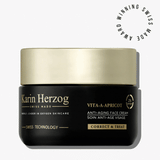
A useful product example within this style of routine is Karin Herzog Vita-A-Kombi, which combines vitamin A with stabilised oxygen in a cream format. For someone trying to keep a retinoid routine supportive rather than harsh, a formula like that can sit within a broader plan focused on renewal plus comfort.
If you want a step-by-step guide for timing and layering, this article on how to use retinol is worth reading before you begin.
After you’ve settled into the basics, this walkthrough may help you visualise the rhythm of a retinol evening routine:
Don’t forget the morning half of the routine
Retinol care starts at night but succeeds in the daytime.
Your morning routine should be boring in the best possible way:
- Cleanse lightly
- Hydrate
- Moisturise if needed
- Apply sunscreen generously
If you’re reviewing options, these sun protection products are a useful place to compare daily formulas suited to regular wear. In retinol in skin care, sunscreen isn’t an optional extra. It’s the partner ingredient.
Exploring Retinoid Alternatives for Every Skin Concern
Not everyone wants standard retinol. Some people want a faster route. Others want the mildest possible introduction. Others need an option that feels less reactive.
That’s where comparisons help.

Retinal is often the overlooked middle ground
Retinaldehyde, usually shortened to retinal, sits one conversion step closer to retinoic acid than retinol. It acts up to 11 times faster in boosting cell turnover and is described as delivering comparable efficacy to prescription-strength options with markedly less irritation, making it a strong option for reactive skin (Medik8 retinoid strength guide).
For many users, retinal is the smart compromise. It often feels more active than classic retinol but not as difficult to live with as stronger prescription forms.
Retinyl esters suit cautious beginners
Retinyl palmitate and similar esters are usually gentler and slower. They may appeal if your skin reacts to almost everything or if you want the lowest-pressure starting point possible.
Their trade-off is patience. You usually won’t choose them for fast visible change. You choose them because you want the softest on-ramp.
Bakuchiol enters a different category
Bakuchiol isn’t a retinoid, but it’s often discussed alongside retinol because people use it when they want a vitamin A alternative. Some prefer it because they want a plant-derived option or because traditional retinoids feel too demanding.
It solves a different problem.
Retinoid and alternative comparison
| Ingredient | Strength & Speed | Best For | Potential Irritation |
|---|---|---|---|
| Retinol | Moderate, gradual | First serious anti-ageing step, uneven texture, mild congestion | Moderate, especially if overused |
| Retinal | Faster than retinol | Users wanting quicker visible change with better tolerance than stronger prescription options | Lower than many stronger retinoids, but still active |
| Retinyl esters | Mild and slow | Very cautious beginners, fragile-feeling skin | Low |
| Bakuchiol | Non-retinoid alternative, generally gentler | People wanting a retinol alternative or a simpler active experience | Usually lower, depending on formula |
If classic retinol feels like too much, that doesn’t mean vitamin A pathways are closed to you. It usually means the format needs changing.
How to choose without overthinking
Ask one question first. Do you want the strongest route your skin might tolerate, or the gentlest route you’ll stick to?
Many individuals do better with the second answer.
Your Karin Herzog Retinol-Ready Routine
A retinol-friendly routine should feel calm, not crowded. The point isn’t to collect actives. The point is to create a structure your skin can sustain.
A simple beginner approach
For someone new to retinol in skin care, the evening routine can stay very lean.
Start with a gentle cleanse. Follow with your retinol product on dry skin once or twice weekly. Finish with a moisturising layer that keeps skin comfortable overnight. On the nights in between, skip retinol and focus on hydration and recovery instead.
If your skin tends to feel tight, an oxygen-based hydrating step can be useful on non-retinol evenings because it keeps the routine restorative rather than aggressive. A plumping moisturiser, a comfort-focused mask, or a lightweight serum can all serve that role.
A more established routine
Once your skin is settled, you can create a rhythm rather than using retinol randomly.
A steady weekly pattern might look like this:
- Night one retinol and moisturiser
- Night two hydration-focused routine
- Night three retinol again if skin feels comfortable
- Night four recovery night with barrier support
- Weekend flexible, based on what your skin is asking for
This style of routine often suits busy professionals because it removes guesswork. You’re not deciding from scratch each evening.
Where supportive products help
When people struggle with retinol, the issue is often not the active itself. It’s the lack of support around it.
Helpful companions usually include:
- A non-stripping cleanser so the skin barrier starts intact
- A hydrating serum when skin feels dehydrated rather than oily
- A replenishing cream or mask for off-nights
- Reliable daytime sunscreen every morning
If you also like to support your skin from within, this guide to skin health supplements that work gives a useful evidence-aware overview of where oral support may fit.
A good routine should feel sustainable
Luxury skin care isn’t about using more. It’s about using the right things with enough consistency to let them work.
If your current routine leaves your face red, confused and over-managed, simplify it. Retinol tends to reward restraint. The skin usually responds better to a clear routine repeated calmly than to a complicated routine performed with intensity.
Frequently Asked Questions About Retinol
Can I use retinol around the eyes
Yes, but only with care. The eye area is thinner and often less tolerant than the rest of the face. Start farther from the lash line, use a very small amount, and buffer with moisturiser if needed. If your usual facial retinol feels too strong there, use a product designed for that area instead.
Can I use retinol on the neck
You can, but the neck often reacts faster than the face. Treat it as a more delicate zone. Apply less product and use it less often at first.
What happens if I stop using retinol
Your skin won’t suddenly worsen because you stopped. But the ongoing support retinol provides won’t continue, so over time your skin returns to its natural baseline pattern of ageing, turnover and texture.
How do I know if I’m purging or reacting badly
Look at location and sensation. If blemishes appear where you normally break out and the skin otherwise feels manageable, that may be a purge. If the skin burns, swells, stings sharply, or becomes red in areas where you don’t usually have problems, think irritation instead.
Can I use retinol every night
Some people can. Many shouldn’t, at least not at first. Frequency should be earned. If your skin is comfortable, stable and not showing signs of strain, you can slowly build up. If not, fewer nights often produce better results.
Should I use exfoliating acids with retinol
Sometimes, but not automatically and not usually in the same routine when you’re starting out. Too many active layers can create unnecessary inflammation. If your skin is new to retinol, keep the routine simple first.
If you want a routine that makes retinol feel more manageable in Australia’s high-UV climate, explore Karin Herzog for Swiss-made oxygen-based skin care designed to support hydration, comfort and visible renewal alongside vitamin A-focused care.