
A moisturiser with SPF 50 is one of the smartest things you can add to your daily skincare routine. It brilliantly combines two non-negotiable steps—hydration and serious sun protection—into one. Especially under the harsh Australian sun, this dual-action product is no longer just for beach days; it’s a daily ritual for keeping your skin healthy and youthful.
Why A Moisturiser With SPF 50 Is A Skincare Game Changer

The way we think about skincare has completely changed. We now understand that protecting our skin from the sun is the single most important step in preventing premature ageing and maintaining its health. A moisturiser with SPF 50 has evolved from a simple convenience into a sophisticated, multi-benefit cornerstone of any modern routine.
This guide will be your go-to resource for understanding these powerhouse products. We'll explore how they work, who benefits most, and how to choose the perfect one for your unique skin and lifestyle.
The Rise of Daily High-Level Protection
Gone are the days of saving sunscreen for holidays. Australians, more than anyone, know the daily threat of intense UV exposure. This growing awareness is clear from our habits, with more and more people incorporating higher SPFs into their everyday routines.
The Australian sun care market, valued at USD 332.12 million in 2024, is expected to climb to USD 486.31 million by 2030. A telling sign of this shift is that the daily use of SPF 50+ products has almost doubled among Australians, jumping from just 6% in 2018 to 11% in 2024. This shows a major reassessment of our sun protection priorities.
This data confirms we’re no longer just looking for seasonal protection; we’re demanding daily defence.
A moisturiser with SPF 50 isn't just about preventing sunburn. It's about providing a consistent, high-level shield against the daily environmental aggressors that accelerate skin ageing, cause discolouration, and damage cellular health.
More Than Just Sunscreen
Making a moisturiser with SPF 50 a part of your daily ritual simplifies your morning while delivering powerful benefits well beyond basic sun protection. Today’s advanced formulas are packed with skin-loving ingredients that tackle multiple concerns at once.
-
Anti-Ageing Support: High SPF is your best defence against photoageing—the wrinkles, fine lines, and loss of firmness caused by sun exposure. Combining this with a strong best skincare routine for aging skin can dramatically improve your skin's long-term health and appearance.
-
Hydration and Barrier Function: At their core, these products are formulated as moisturisers. They work to lock in hydration and support the skin’s natural barrier, keeping it plump, resilient, and comfortable all day long.
-
Preventing Damage: Consistent use is key to preventing the formation of new dark spots and hyperpigmentation. If you’re already working on existing sun damage, our guide on how to repair sun damage with an anti-ageing protocol is a great next read.
By combining these functions, a quality moisturiser with SPF 50 becomes an indispensable tool for achieving and maintaining healthy, radiant skin, every single day.
Decoding The Science Behind SPF 50 Protection

The number on your sunscreen bottle can feel a bit abstract. What does SPF 50 really mean for your skin, not in a lab, but in your daily life? Let's move past the jargon and break down the science in a way that makes practical sense.
Think of the SPF number as a time multiplier for your skin's own natural defence. If your unprotected skin typically starts to turn red after 10 minutes in the sun, a properly applied SPF 50 product would, in theory, extend that time to about 500 minutes (10 minutes x 50).
Of course, this is just a guide. Real-world factors like sweat, the time of day, and how thickly you apply it all play a role. This is precisely why a high number like SPF 50 is so valuable—it gives you a far more robust safety net against the harsh Australian sun.
Understanding UVA and UVB Rays
The SPF number on the bottle primarily tells you about protection against UVB (Burning) rays. These are the rays responsible for the immediate, visible signs of sun damage we all recognise, like redness and sunburn.
But UVB is only half the story. The sun also emits UVA (Ageing) rays, which are much more deceptive.
UVA rays penetrate deeper into the skin, causing long-term, often invisible damage. They are the main culprit behind premature ageing, as they relentlessly break down the collagen and elastin that keep your skin firm and youthful. Over time, this leads to wrinkles, fine lines, and sagging.
Because UVA rays are present all day, every day—and can even pass through clouds and glass—protecting your skin from them is non-negotiable for any daily anti-ageing routine. This is where the term "Broad-Spectrum" becomes absolutely critical.
A "Broad-Spectrum" label on your moisturiser with SPF 50 is your assurance that the formula protects you from both UVA and UVB radiation. Without it, you’re only getting partial protection, leaving your skin vulnerable to accelerated ageing and deeper cellular damage.
Why Broad-Spectrum Is Non-Negotiable
Choosing a product that isn't broad-spectrum is like locking your front door but leaving all the windows wide open. You might prevent the most obvious threat (a sunburn), but you're still completely exposed to the silent damage that builds up day after day.
Here’s why this dual defence is so essential:
- Complete Anti-Ageing: By shielding your skin from both types of UV rays, a broad-spectrum SPF 50 moisturiser provides a comprehensive defence against photoageing—the number one cause of premature wrinkles.
- Pigmentation Prevention: UVA exposure is a major trigger for hyperpigmentation, sun spots, and an uneven skin tone. Consistent broad-spectrum protection helps keep your complexion clear and even.
- Year-Round Safety: UVA rays maintain their intensity throughout the year. That means daily protection is just as necessary on a cloudy winter day as it is during a summer heatwave.
A high SPF number is an excellent start, but it's the broad-spectrum promise that elevates a product from a simple sunscreen to a true anti-ageing tool. For those wanting to delve deeper into optimising their routine, you can learn more about combining hydration and protection in our overview of SPF 50 moisturisers. This foundational knowledge helps you appreciate why a high-quality, dual-action formula is one of the best investments you can make for your skin's future health and vitality.
When you’re choosing a moisturiser with SPF 50, you’ll quickly notice there are two main camps: physical and chemical sunscreens. Getting your head around how they work is the key to finding the right one for you, and it’s much simpler than it sounds.
Let’s use an easy analogy. Think of physical sunscreens as a shield. These formulas use mineral ingredients like zinc oxide and titanium dioxide that sit right on the surface of your skin. They work by physically blocking and scattering UV rays away, a bit like a tiny mirror reflecting sunlight before it can ever penetrate your skin.
On the other hand, chemical sunscreens act more like a sponge. They use synthetic compounds, such as avobenzone, that are absorbed into the skin. When UV radiation hits, these ingredients kick off a chemical reaction that converts the UV rays into heat, which is then released from the skin’s surface.
The Shield: Physical Sunscreens
Physical sunscreens are often celebrated for being incredibly gentle, which makes them a fantastic choice if your skin is sensitive, reactive, or prone to conditions like rosacea. Because the active ingredients rest on top of the skin instead of sinking in, there’s a much lower risk of irritation.
Another big plus is that they start working the second you apply them. There’s no waiting around before you can head outside, which is a huge advantage for anyone with a busy morning routine.
The traditional downside? Physical formulas have been known for leaving a white or greyish cast on the skin, which can be particularly noticeable on deeper skin tones. While modern micronised versions have made this much less of an issue, it can still be a factor. They also tend to feel a bit thicker, which might not be everyone’s cup of tea.
The Sponge: Chemical Sunscreens
Chemical sunscreens have won over legions of fans because of their beautiful, cosmetically elegant textures. They’re usually lightweight, absorb into the skin without a trace, and feel just like a regular moisturiser, making them a dream to layer under makeup.
One key thing to remember is that chemical filters need a moment to get to work. You’ll want to apply your sunscreen about 20 minutes before heading into the sun. This gives the ingredients time to fully absorb and create that protective ‘sponge’ effect within your skin.
The main drawback is that the process of turning UV light into heat can sometimes be an issue for those with rosacea or very sensitive skin, as that slight increase in skin temperature can occasionally trigger a bit of flushing. Certain chemical filters have also been debated for their potential to cause skin sensitivity.
To help you weigh it up, here’s a quick comparison of how the two types stack up against each other.
Physical vs Chemical Sunscreen: A Quick Comparison
This table breaks down the key characteristics of physical (mineral) and chemical (synthetic) sunscreens to help you figure out which one is the better fit for your skin and lifestyle.
| Feature | Physical Sunscreen (Mineral) | Chemical Sunscreen (Synthetic) |
|---|---|---|
| How It Works | Sits on top of the skin and acts as a physical barrier to block UV rays. | Absorbs into the skin and converts UV radiation into heat. |
| Active Ingredients | Zinc Oxide, Titanium Dioxide. | Avobenzone, Oxybenzone, Octinoxate, and others. |
| Best For | Sensitive, acne-prone, and reactive skin. Excellent for children. | Most skin types, especially for daily wear under makeup. |
| Texture & Finish | Can be thicker and may leave a slight white cast. | Typically lightweight, sheer, and absorbs invisibly. |
| Protection Speed | Works immediately upon application. | Requires about 20 minutes to absorb and become effective. |
| Potential Downsides | Can feel heavy and may not suit all skin tones. | Can sometimes irritate sensitive skin or trigger heat-related flushing. |
Ultimately, both physical and chemical sunscreens provide excellent protection when formulated and used correctly. The best choice is always the one that feels great on your skin and that you'll use consistently every day.
The choice between a physical shield and a chemical sponge isn’t about which one is "better" overall. It's about what’s better for your skin. Your personal preference for how it feels, how it looks, and your skin’s unique needs should be your guide.
How To Choose For Your Skin Type
So, which team should you join? It really just comes down to your skin’s individual quirks and what you find most comfortable for daily use. Getting to know what different ingredients do is a brilliant first step, and you can dive even deeper by learning more about the active ingredients in skincare to become a true expert on your own routine.
Here’s a quick rundown to help you pick your perfect moisturiser with SPF 50:
- For Sensitive or Acne-Prone Skin: Physical sunscreens are often your safest bet. Zinc oxide, in particular, is a real hero here—it’s known for its anti-inflammatory properties and won’t clog your pores.
- For Deeper Skin Tones: To avoid any chance of a white cast, look for modern chemical sunscreens or beautifully formulated tinted physical options.
- For an Active Lifestyle: If you’re playing sports or spending a lot of time outdoors, many chemical sunscreens are designed to be very water- and sweat-resistant, giving you durable protection.
- For Daily Wear Under Makeup: The light, invisible finish of most chemical sunscreens makes them a perfect primer, creating a smooth, flawless canvas for foundation.
At the end of the day, the best sunscreen is the one you’ll be happy to put on every single morning. Whether you prefer a mineral shield or a synthetic sponge, it’s that consistency that will give you true, lasting protection from the sun.
Finding Your Perfect Moisturiser With SPF 50

Now that you're clear on how sunscreen filters work, we can move on to the really exciting part: what’s inside the formula beyond the UV protection. The best moisturiser with SPF 50 isn’t just one that shields your skin; it’s one that actively works with you to meet your skin goals. It's time to get practical and find your perfect match.
Think of the SPF as the non-negotiable foundation of the product. The other ingredients are the customised features that elevate it from a simple sunscreen into a targeted skin treatment.
Decoding Formulas for Specific Skin Concerns
Your skin’s unique needs should always be the guiding force behind your choice. Whether you’re focused on anti-ageing, managing sensitivity, or keeping breakouts at bay, there’s a formula out there designed for you.
For those with anti-ageing as a primary goal, look for an SPF 50 moisturiser that's supercharged with complementary ingredients. Antioxidants like Vitamin C and E are brilliant additions, as they help neutralise the free radical damage that your sunscreen might not fully block. Ingredients like hyaluronic acid are also fantastic, providing a plumping, hydrating effect that visibly smooths the appearance of fine lines.
If you have sensitive or acne-prone skin, your ingredient checklist will look quite different. Here, the goal is protection without a hint of irritation or congestion. A gentle, considered formula is absolutely key.
- Non-Comedogenic: This is your assurance that the product has been formulated in a way that won’t clog your pores—a crucial factor for preventing breakouts.
- Fragrance-Free: Synthetic fragrances are one of the most common triggers for sensitivity, redness, and irritation. Opting for a fragrance-free formula is a simple way to minimise this risk.
- Soothing Ingredients: Look for calming agents like niacinamide or even the zinc oxide in physical sunscreens, which can help reduce inflammation and redness.
When you’re navigating the options for your perfect SPF 50 moisturiser, particularly with sensitive skin, exploring a guide to the best Korean sunscreen for sensitive skin can offer some excellent insights into gentle yet highly effective formulas.
Understanding Texture, Finish, and Other Claims
Beyond the ingredient list, how a product feels and looks on your skin is what will ultimately determine if you'll love using it every single day. This is where texture and finish come into play.
A matte finish is often perfect for those with oily or combination skin, as it helps control shine throughout the day. In contrast, a dewy finish can give dry or dull skin a luminous, healthy-looking glow. For those with particularly parched skin, our article on skin products for dry skin can help you build a complete, hydrating routine from start to finish.
You’ll also see claims like “water-resistant” on many labels. It's important to know this doesn't mean waterproof. A water-resistant label indicates the sunscreen maintains its stated SPF level for a specific time (usually 40 or 80 minutes) while swimming or sweating. This is a must-have for beach days or outdoor exercise, but it’s less critical for a typical day at the office.
At the end of the day, the most effective moisturiser with SPF 50 is the one you’re happy to apply generously every single morning. Never underestimate the power of a formula that feels absolutely wonderful on your skin.
The Importance of Trustworthy Claims
Finally, it’s essential to choose products from brands that prioritise transparency and proven efficacy. This has become especially important after a landmark Australian investigation revealed major gaps between advertised and actual sun protection levels.
The consumer group CHOICE tested 20 popular sunscreens all claiming SPF 50+ protection, with a shocking 16 of them failing to meet their advertised claims. This has rightfully made consumers far more discerning, favouring brands that are open about their testing and formulation standards. Choosing a brand with a long-standing reputation for scientific rigour gives you confidence that you’re truly getting the protection you’re paying for.
Mastering The Art Of SPF Application And Reapplication
Finding the perfect moisturiser with SPF 50 is half the battle won. The other half? Applying it correctly. Owning a beautiful product is one thing, but using it in a way that unlocks its full protective power is something else entirely. Let's walk through how to apply and reapply your sunscreen for flawless, consistent coverage that truly shields your skin from the harsh Australian sun.
Getting this right isn’t just about going through the motions; it’s about making sure your skin is genuinely protected from morning until night. It’s a simple art, but mastering it makes all the difference.
How Much SPF Is Enough?
This is where so many of us fall short. Skimping on your sunscreen can dramatically lower the protection you’re getting, leaving your skin exposed despite your best efforts. To get the full SPF 50 protection promised on the bottle, you need to be generous.
The easiest guide is the Two-Finger Rule. Simply squeeze two full lines of your SPF moisturiser along your index and middle fingers. This amount, roughly half a teaspoon, is what dermatologists recommend to properly cover your face and neck.
It might feel like a lot at first, but this is the amount used in clinical testing to guarantee an effective, even barrier against UV radiation. Anything less, and you’re simply not getting the SPF 50 protection you paid for.
Once you’ve got the right amount, it’s time to think about where it fits into your routine.
The Correct Order Of Application
For your sunscreen to do its job, it absolutely must be the last skincare product you apply. Think of it as a protective shield that seals in all your lovely serums and hydrators while defending your skin from the outside world.
Applying a moisturiser or oil on top of your SPF can break down the protective film it forms on your skin, diluting its strength and creating weak spots in your coverage.
Here’s the simple, foolproof order for your morning routine:
- Cleanse: Always start with a fresh, clean canvas.
- Treat: Apply any targeted serums, like vitamin C or hyaluronic acid.
- Hydrate (If Needed): If you have very dry skin, you can apply a separate lightweight moisturiser here and let it sink in completely. For most, a good SPF 50 moisturiser is hydrating enough on its own.
- Protect: Apply your two-finger measure of moisturiser with SPF 50. Give it a few minutes to set before moving on to makeup.
Following this sequence ensures every product can perform without interference. It’s also your best defence against the dreaded "pilling," where products start to ball up on the skin. Allowing each layer to fully absorb is the secret to a smooth, pill-free finish.
The Real Deal On Reapplication
A great morning application is a fantastic start, but it’s not a set-and-forget situation. Sunscreen naturally breaks down with sun exposure and wears off from sweat, oil, and simply touching your face. For all-day protection, reapplication is non-negotiable.
The golden rule is to reapply at least every two hours when you’re spending time outdoors, swimming, or sweating. But what about a typical day spent mostly inside?
- An Office Day: If you’re indoors all day and away from a window, your thorough morning application is generally sufficient. But if you sit near a window or are popping out for lunch, a midday top-up is a very smart move.
- A Day Outdoors: Here, the two-hour rule is law. Set a reminder on your phone. It doesn't matter if it's cloudy or full sun; UV radiation is always present.
Reapplying over makeup used to be a challenge, but modern formulations have made it incredibly simple. SPF mists and powders are brilliant for topping up your protection without smudging your foundation. Just mist over your face or dust on a translucent SPF powder to refresh your shield, ensuring your defence stays strong no matter what your day throws at you.
Your Top SPF 50 Moisturiser Questions Answered
Even with a good grasp of how a moisturiser with SPF 50 works, you probably still have a few questions. That’s completely normal. Committing to a new product as a non-negotiable part of your daily routine always comes with a bit of a learning curve.
To help you feel completely confident in your choice, we’ve gathered the most common questions people ask when they start using a high-SPF moisturiser. Let's clear up any lingering confusion with straightforward, expert answers.
Is SPF 50 Really Better Than SPF 30 For Daily Use?
Yes, and this is especially true for anyone living under the intense Australian sun. While the numbers might seem close, the real difference is quite significant when you look at it from another angle.
An SPF 30 product blocks roughly 97% of UVB rays. An SPF 50 product blocks about 98%. That 1% difference might not sound like much, but it means that an SPF 30 formula allows 50% more UV radiation to reach your skin compared to an SPF 50 formula.
Over months and years of daily exposure, that extra protection adds up considerably. For safeguarding your skin against the cumulative damage that leads to premature ageing, pigmentation, and skin cancer, an SPF 50 moisturiser provides a much more robust safety margin.
This infographic breaks down the core steps of application, ensuring you get that full protection every single time.

The key is to measure correctly, apply thoroughly, and reapply consistently to maintain that shield of protection throughout the day.
Do I Still Need A Separate Moisturiser?
This is a great question, and the answer truly depends on your skin. The goal is always to achieve both hydration and protection without overwhelming your complexion.
For most people with normal, combination, or even oily skin, a well-formulated moisturiser with SPF 50 is more than enough to handle both jobs in your morning routine. Modern formulas are designed to deliver ample hydration alongside their sun-shielding duties, effectively streamlining your routine into one simple step.
However, if you have very dry or dehydrated skin, you might find you need an extra layer of moisture to feel comfortable all day.
- Listen to your skin: If your face feels tight or looks flaky by midday, it’s a clear sign you need more hydration.
- Layer strategically: In this case, apply a dedicated hydrating serum or a lightweight, non-SPF moisturiser first.
- Let it absorb: Always allow your hydrating layer to sink in completely before applying your SPF 50 moisturiser on top. This ensures you get the full benefit of both products without compromising your sun protection.
Essentially, a two-in-one product works beautifully for many, but don't hesitate to add a hydrating base layer if your skin is telling you it’s thirsty.
Must I Wear Sunscreen On Cloudy Days Or Indoors?
The answer is a resounding yes. This is one of the most important habits you can adopt for the long-term health of your skin, and it all comes down to UVA rays.
These are the primary culprits behind skin ageing, and they are incredibly persistent. Up to 80% of the sun's UVA radiation can penetrate through cloud cover, meaning that even on the greyest, most overcast day, your skin is still exposed to the rays that break down collagen. The "burning" UVB rays might be weaker, but the "ageing" UVA rays are still hard at work.
What’s more, these UVA rays can also pass straight through standard window glass.
If you work in an office with a big window, spend a lot of time driving, or even just sit in a sunny room at home, you are receiving a constant, low-level dose of UV radiation. This incidental exposure is a major contributor to premature ageing over a lifetime.
Making a broad-spectrum moisturiser with SPF 50 a non-negotiable step in your daily routine—regardless of the weather or your plans—is the single most effective action you can take. It’s the ultimate investment in your skin's future, creating a consistent shield that protects you from the silent damage you won't see until years later.
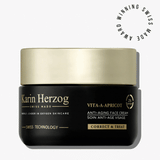
Ready to experience the benefits of advanced, oxygen-powered sun protection? Discover the elegant and effective formulas from Karin Herzog and give your skin the daily defence it deserves. Explore the collection at https://karinherzog.com.au.