
You’ve had a treatment. Your skin feels warm, a bit tight, and more reactive than usual. You’re standing at the bathroom mirror wondering what goes on first, what needs to wait, and what will calm things down without undoing the work you’ve just paid for.
That’s the moment laser aid, skinstitut usually enters the conversation. In Australian clinics and home routines, it’s become one of those products people keep on hand because it feels purpose-built for the uncomfortable in-between stage after laser, IPL, waxing, or an angry patch of overexposed skin.
Used well, it can be very helpful. Used with the wrong expectations, it can also be misunderstood. A soothing product and a regenerative strategy are not always the same thing. If your goal is not just comfort, but safe recovery and the best long-term skin result, it helps to know exactly where Laser Aid fits.
The First Step in Post-Treatment Skin Recovery
You leave the clinic looking fine to everyone else, but your skin tells a different story. It’s flushed. Heat seems trapped under the surface. Even a soft cleanser sounds risky.
That early window matters because freshly treated skin is often more vulnerable than it looks. The instinct to “do something” is right, but the wrong something can stir up more redness.
A common example is the client who’s had a rejuvenation session and wants to restart their full active routine that night. That’s usually too soon. Right after procedures, skin often responds better to calming, simple support than to ambitious correction.
If you’ve recently had an energy-based treatment and want context on how these procedures work, this overview of Aerolase laser skin rejuvenation treatment gives a useful picture of the kind of skin goals people are trying to protect with good aftercare. The same logic applies after many in-clinic treatments. The result doesn’t stop at the machine. It continues at home.
Practical rule: In the first stage of recovery, comfort is not cosmetic. It’s part of reducing unnecessary irritation so the skin can settle.
This is why many therapists recommend a dedicated post-treatment product instead of an ordinary moisturiser. Skinstitut Laser Aid is one of the names clients hear often because it’s designed specifically for those “my skin feels hot and cross” moments.
For clients doing treatments such as needling, the same aftercare principle applies. Keep the routine plain, gentle, and barrier-aware. This guide on https://karinherzog.com.au/blogs/news/skin-needling-aftercare is a helpful example of the kind of conservative thinking that protects results.
What Exactly Is Skinstitut Laser Aid
Skinstitut Laser Aid is best understood as a cooling, calming post-treatment gel-emulsion. It’s designed for skin that feels overheated, looks red, or has been temporarily unsettled by procedures such as non-CO2 laser, IPL, waxing, electrolysis, or sun exposure.
It isn’t a treatment serum in the usual sense. It behaves more like a recovery product. Its job is to make compromised skin feel more comfortable while supporting hydration at a time when the barrier is under strain.

What people usually notice first
Most clients comment on the texture before anything else. Laser Aid is described as a glossy, light emulsion, so it spreads easily and doesn’t feel like a heavy occlusive balm.
That matters after treatment because skin often won’t tolerate rich, greasy layers well, especially when there’s lingering surface heat. A lighter texture can feel more acceptable, which means people are more likely to use it properly.
Its main role is fairly straightforward:
- Soothe visible redness
- Reduce the sensation of heat and irritation
- Add hydration to vulnerable skin
- Provide a simple option when actives need to pause
Why it’s so visible in Australia
Skinstitut has a strong local footprint. According to Brandsearch data on Skinstitut’s Australian market presence, Skinstitut AU generates approximately A$147,000 in monthly revenue, attracts 32,000 monthly visitors, and 68% of its traffic comes from Australia. The same source notes that Laser Aid is one of its top products and retails for around A$40.50.
That doesn’t prove superiority on its own, but it does explain why so many Australian clients already know the name. It’s not a niche product hidden in one clinic. It’s a recognised aftercare staple.
What it is, and what it isn’t
A lot of confusion comes from expecting one product to do every job.
Laser Aid is useful when your skin needs calming. It’s less helpful as a stand-alone answer to every long-term concern that follows a procedure.
Think of it this way:
| What Laser Aid is | What Laser Aid isn’t |
|---|---|
| A post-treatment comfort product | A full corrective routine |
| A hydration and redness support step | A substitute for all long-term skin rebuilding |
| A good “first response” option | A reason to rush back into strong actives |
That distinction makes the rest of your aftercare much easier to plan.
Decoding the Key Ingredients and Their Functions
A calming post-treatment product only works if each ingredient has a clear job. Laser Aid is built that way. Instead of asking one ingredient to do everything, it combines humectants, soothing agents, plant extracts, and texture-formers to address several short-term recovery needs at once.

Panthenol for hydration and barrier support
Panthenol, also called provitamin B5, is one of the formula's most practical inclusions. Its main role is water management. After a laser, peel, or other in-clinic treatment, the skin barrier can behave like a roof with a few tiles missing. Water escapes faster, and the skin starts to feel tight, hot, and easily irritated. Panthenol helps reduce that dry, pulled feeling by drawing in and holding moisture near the surface.
Clients often find this confusing because post-procedure skin can feel oily and dehydrated at the same time. That is common. Surface oil does not always mean the barrier is comfortable.
Bisabolol for visible calm
Bisabolol is a soothing ingredient commonly linked with chamomile. Its value here is not marketing language about "botanical comfort." Its value is that it helps settle skin that looks flushed and feels reactive.
In practical terms, this is the ingredient category that supports comfort when the skin stings on contact or seems over-aware of everything you apply. It does not rebuild the skin on its own, but it can make the recovery window easier to tolerate.
Witch hazel and the redness question
Witch hazel is the ingredient that usually raises the most questions. Some clients hear "astringent" and assume it should never appear in post-treatment care. The matter is more complex. In the right formula, its role is to help reduce the appearance of redness and excess reactivity on the surface.
A product summary for Skinstitut Laser Aid describes this as a multi-part approach, with panthenol supporting hydration, bisabolol helping calm inflammatory activity, and witch hazel contributing an astringent effect that may help reduce visible flushing and irritation.
That does not mean witch hazel suits every skin type equally well. Very reactive, very dry, or easily sensitised skin sometimes does better with recovery products that focus less on temporary constriction and more on active skin repair.
Red skin after a procedure usually needs controlled support, not an overloaded routine.
Supporting botanicals and texture agents
Laser Aid also contains aloe vera, horse chestnut extract, ginger root extract, Canadian willowherb, cucumber oil, and vitamins B5 and E. These ingredients add to the overall soothing profile, but they are supporting players rather than the whole story.
The base of the formula matters too. A good post-treatment gel cream should spread with very little drag, sit lightly, and create a comfortable film over vulnerable skin. That film does not "heal" the skin by itself, but it can reduce friction and help the area feel less exposed while the barrier settles.
If you want a stronger grasp of how ingredient roles differ between soothing, hydrating, and corrective products, this guide to active ingredients in skincare formulations is useful background reading.
Why this matters to the client at home
The key point is simple. Laser Aid is designed to calm a situation. It is not designed to deliver the same kind of long-term regenerative activity as a more bio-active recovery formula.
That distinction matters in premium skincare. A product can be very good at reducing heat, redness, temporary irritation, surface dehydration, and barrier discomfort straight after treatment, yet still be only the first phase of recovery. If your goal is immediate comfort, this ingredient mix makes sense. If your goal is longer-term healing quality, collagen support, and visible rejuvenation after the skin has stabilised, a more advanced oxygen-based approach can offer more than short-term relief.
Proper Application for Post-Treatment Care
You have just had a laser session. Your skin feels warm, looks pink, and reacts to even light touch. In that moment, application technique matters almost as much as the product itself.
Post-treatment skin should be handled like freshly laid fabric. If you pull, rub, or overwork it, you create more heat and friction when the goal is calm, protected recovery.
How to apply it
Skinstitut’s directions are simple: apply generously through the day until the visible redness settles, and avoid rubbing over open areas.
A practical home routine looks like this:
-
Start with clean hands
Freshly treated skin is more exposed than usual, so cleanliness helps reduce unnecessary irritation. -
Use more than your usual moisturiser amount
After a procedure, the aim is to lay down a comforting layer, not to work a small amount all the way in. -
Press or glide very lightly
If the skin feels hot or tender, gentle pressing is often better than massaging. You want contact without drag. -
Leave a light cushion on the skin
A thin surface film can reduce that tight, exposed feeling. If there is obvious excess, blot softly with tissue rather than wiping.
Why technique changes after a procedure
Clients often assume aftercare should be applied the same way as their night cream. That is where problems start. A normal moisturiser is usually massaged in to improve absorption and spread actives evenly. Post-laser care is different because the skin barrier is temporarily less comfortable, more reactive, and more prone to water loss.
So the job here is protection first. Comfort first. Low friction first.
That is also why Laser Aid tends to work best in the early recovery window, when cooling and cushioning are the priority. Once the skin is calmer, the conversation can shift from soothing to actual skin rebuilding. If post-treatment irritation tends to linger for you, a broader barrier repair cream approach can help you judge whether your aftercare is only relieving symptoms or supporting stronger recovery.
Best use cases
Laser Aid is usually most useful when skin feels:
- Hot and flushed after laser or IPL
- Tender after waxing
- Reactive after electrolysis
- Dry, tight, or stingy after a strong in-clinic treatment
It is less appropriate as a licence to restart exfoliants, retinoids, or active serums too early. Calm skin can still be healing underneath. Comfort and readiness are not always the same thing.
A cooling product only helps if the application stays cooling. Friction adds heat back into the skin.
Used well, Laser Aid supports the first phase of recovery. That first phase is important, but it is still only the beginning if your goal is the best possible healing quality and long-term skin results.
Comparing Soothing Relief with Active Regeneration
The most useful way to evaluate Laser Aid is not to ask whether it’s “good” or “bad”. It’s to ask what category of help it gives.
Laser Aid is a soothing relief product. That’s a valuable category. It’s just not the same category as products designed for longer-term skin revitalisation.

The fire extinguisher versus rebuilding tools idea
In clinic language, Laser Aid behaves a bit like a fire extinguisher. You reach for it when the skin is hot, reactive, and asking for calm. It’s there for the immediate problem.
That’s different from products chosen later in recovery to support ongoing skin quality, resilience, texture, and visible rejuvenation. Those products are not there to douse the fire. They’re there to help rebuild well once the heat has settled.
This distinction matters because clients often judge an aftercare product by how nice it feels in the first hour, then assume that same sensation tells them everything about long-term outcomes. It doesn’t.
Where the evidence gap sits
One of the most important points about Laser Aid is also the least discussed. There’s a gap between short-term comfort and documented long-term barrier recovery.
As discussed in Adore Beauty’s article on Skinstitut Laser Aid uses, while Laser Aid is praised for its immediate soothing benefits, there is little public data on its long-term efficacy for skin barrier recovery or cumulative benefits, leaving a gap for consumers seeking evidence-based guidance on sustained healing versus temporary symptom relief.
That doesn’t mean it doesn’t help. It means we should be precise about what we know. It is widely valued for immediate relief. Public detail on cumulative recovery outcomes is limited.
A balanced comparison
If you want to decide where Laser Aid belongs, this side-by-side view is the clearest way to think about it.
| Attribute | Skinstitut Laser Aid | Karin Herzog Oxygen Products |
|---|---|---|
| Primary role | Immediate post-treatment soothing | Ongoing skin revitalisation and recovery support |
| Best timing | Early recovery when skin feels hot or irritated | Later routine planning when skin is ready for more active care |
| Texture profile | Glossy light emulsion | Varies by formula |
| Main user goal | Comfort, hydration, reduction of visible redness | Long-term skin quality, radiance, and rejuvenation goals |
| Strength | Quick relief and easy tolerance in reactive moments | More strategic for clients focused on ongoing visible skin improvement |
| Limitation | Public long-term outcome data is limited | Not usually the first product applied to freshly heated post-procedure skin |
What this means in practice
If you’ve just had treatment and your skin is warm, pink, and fussy, Laser Aid makes sense. It addresses the immediate state of the skin.
If you’re three steps ahead and asking how to support superior healing, resilience, and visible rejuvenation over time, you’re asking a different question. At that point, a broader active skincare philosophy becomes more relevant than a single calming gel.
Relief and regeneration are related, but they’re not interchangeable.
A knowledgeable client usually does best when they separate those two goals. First settle the skin. Then choose the products that support the longer game.
Integrating Aftercare Into Your Skincare Routine
The smartest routine doesn’t force one product to do every job. It uses the right tool at the right stage.
That usually means thinking in phases rather than asking, “What’s the one best aftercare product?”

The immediate recovery phase
In the first window after treatment, keep the routine sparse.
A sensible structure is:
- Gentle cleanse if advised by your treating professional
- Laser Aid as the comfort step
- Sun protection once appropriate, depending on your provider’s instructions and the type of treatment
During this phase, less usually works better. Your skin doesn’t need a performance routine. It needs quiet support.
The transition phase
As the heat, stinging, and obvious reactivity settle, you can start thinking beyond comfort. Many people go wrong by jumping straight back to acids, retinoids, scrubs, or strong brighteners.
A better question is, “Has my skin returned to behaving like my skin?” If the answer is no, stay conservative.
Signs you may still need a simple routine:
- Persistent tightness
- Redness that flares easily
- Stinging with ordinary products
- Dry patches despite moisturising
The maintenance and results phase
Once the skin is stable again, your routine can become more goal-led. That’s where products chosen for hydration, tone, ageing support, clarity, or radiance do their best work.
This is also where daily UV protection becomes essential. If you’ve invested in procedures, protecting the result matters just as much as achieving it. For anyone refining that step, https://karinherzog.com.au/blogs/news/spf-50-moisturisers is a useful practical read.
A simple way to think about the sequence is:
| Phase | Main priority | Routine style |
|---|---|---|
| Right after treatment | Calm and comfort | Minimal, soothing, non-irritating |
| Skin settling | Barrier stability | Gentle and selective |
| Back to normal | Long-term skin goals | More active, structured routine |
The key is patience. Better aftercare is often less dramatic than people expect. It’s usually made up of timely restraint, not product overload.
Common Laser Aid Questions Answered
Can I use Laser Aid on pimples or hormonal breakouts
Some people do use it that way because it can feel calming on inflamed skin. That said, it was formulated primarily as a post-treatment soothing product, not as a dedicated acne treatment. If breakouts are your main concern, it’s better to think of Laser Aid as comfort support rather than a complete blemish strategy.
Is it suitable for rosacea-prone skin
It’s often considered friendly for reactive skin because it’s designed to reduce visible irritation and discomfort. Still, rosacea skin can be unpredictable. Patch testing and professional guidance are sensible, especially during a flare.
How long should I use it after treatment
Use it for the period when your skin still feels hot, red, or unusually fragile, and follow the instructions given by your treating practitioner. The main decision point isn’t the calendar. It’s whether the skin has settled enough to tolerate a more normal routine again.
Can I apply it with other active products
Usually not at first. Freshly treated skin does better when the routine is simplified. Once your clinician says the skin has recovered, you can reintroduce actives gradually instead of all at once.
Is it enough on its own for long-term recovery
For immediate soothing, it can be a very useful first-line product. For broader long-term skin goals, most clients eventually need a more complete routine built around their skin type, treatment plan, and recovery pattern.
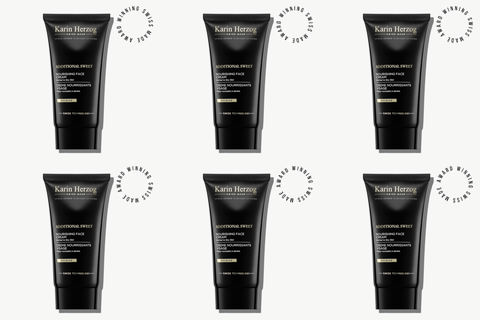
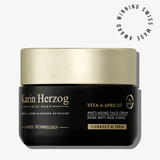
If you want aftercare that goes beyond temporary soothing and supports a more complete skin strategy, explore Karin Herzog. Their Swiss oxygen skincare approach is designed for clients who want visible results, thoughtful routines, and science-led support for skin that needs both comfort and long-term care.