
You cleanse carefully, pat your skin dry, then pause at the shelf or your bathroom counter and wonder whether toner is worth the effort. If you've ever picked one up, read words like balancing, clarifying, hydrating, refining, and put it back down more confused than before, you're not alone.
Toner skin care is one of the most misunderstood parts of a routine. Many people still associate toners with the sting of old-school astringents, the kind that left skin tight, shiny, and slightly annoyed. Modern toners are different. Used well, they can help your skin feel calmer, look fresher, and respond better to the products you apply next.
For Australian skin, that matters even more. Heat, UV exposure, air conditioning, and frequent cleansing can leave the skin feeling out of balance fast. A good toner doesn't need to be dramatic to be useful. Its job is simple. Help reset the skin after cleansing and make the next steps work harder.
The Most Misunderstood Step in Your Skincare Routine
A reader once described her routine like this: cleanser she trusts, serum she splurged on, moisturiser she likes, and a toner she bought because everyone else seemed to have one. She used it for three days, felt unsure what it was doing, and stopped.
That experience is common. Toner often becomes the product people use without understanding, or skip without realising what they're missing. The confusion usually comes from history. Many of us were introduced to toner as something harsh. If your memory involves cotton pads and a burning sensation, you learned toner through the wrong formula.
Modern toner skin care has a different role. It isn't about stripping your face until it feels squeaky clean. It’s about bringing the skin back into balance after cleansing, removing leftover residue if needed, and preparing the surface so serums and creams sit better and absorb more evenly.
Why people still get toner wrong
The beauty aisle doesn't help. One bottle says exfoliating. Another says soothing. A third promises glow, pore care, hydration, and radiance all at once. Without a clear framework, toner can feel like a filler step rather than a functional one.
It also gets skipped because people are trying to simplify. That instinct makes sense. But simplifying works best when you remove the unnecessary steps, not the useful ones. If your skin often feels tight after cleansing, reactive when you layer actives, or oddly dry and oily at the same time, toner may be the step that helps the rest of the routine make more sense.
Practical rule: If a toner leaves your skin feeling stripped, it's the wrong toner for your skin.
The old toner myth versus the modern reality
The old version of toner focused on oil removal. The modern version focuses on skin condition. Depending on the formula, a toner can hydrate, soothe, lightly exfoliate, rebalance, or support a more comfortable barrier.
That doesn't mean every person needs the same toner. It means the category deserves a more thoughtful look. If you've been wondering whether you're making one of the common routine errors that hold your skin back, this guide on top skincare mistakes you didn’t know you were making is a useful companion.
What Is a Skin Toner Anyway
Think of toner as primer for your skincare. Not makeup primer. Skin primer.
After cleansing, your skin has been washed, wiped, rinsed, and exposed to water, surfactants, and friction. Even with a gentle cleanser, that process can leave the surface a little unsettled. A toner steps in right after cleansing to help restore comfort and create a better canvas for what comes next.

What toner actually does
A good toner can do several jobs at once:
- Rebalance the skin surface after cleansing
- Remove leftover traces of cleanser, sunscreen, or makeup
- Add a first layer of hydration
- Prepare skin for serums and creams so they apply more evenly
This highlights the role of pH. Your skin naturally prefers a slightly acidic environment. In the Australian skincare market, where environmental stressors like intense UV exposure can compromise the skin's natural pH balance, typically 4.5 to 5.5, modern alcohol-free toners can restore this acidic mantle and support the barrier against water loss by up to 20 to 30% according to PMD’s explanation of toner and the skin barrier.
Why pH matters in plain language
You don't need to memorise chemistry terms to understand this. When skin is balanced, it tends to feel calmer and less reactive. When it’s pushed too far in the wrong direction, it can feel tight, dry, shiny, or irritated.
That’s why toner skin care makes more sense when you stop thinking of toner as an optional splash and start thinking of it as a reset step.
A well-chosen toner doesn't fight your skin. It helps your skin return to its normal rhythm after cleansing.
What toner is not
Toner is not a replacement for cleansing. It’s also not a magic shortcut that fixes every issue in one swipe. If your cleanser is too harsh, toner won't fully compensate for that. If your serum is too strong for your skin, toner won't erase the irritation.
What it can do is improve the conditions on your skin so the rest of your routine has a better chance of working well.
The easiest way to tell if toner may help you
You may benefit from a toner if any of these sound familiar:
- Your skin feels tight after washing even when it looks clean
- Your serums pill or sit on top instead of spreading smoothly
- Your complexion swings between dehydration and oiliness
- Your skin gets reactive when you layer active products
The right toner often feels subtle. That’s a good sign. In skin care, products that support balance usually don't announce themselves with a sting.
A Guide to the Different Types of Toners
Choosing a toner gets easier when you sort by goal, not by marketing language. Most toners fit into one of five practical families. Once you know what you're trying to change, the category becomes clearer.

Hydrating toners
These are the comfort toners. Their main job is to add water-binding ingredients and reduce that post-cleanse tightness.
They’re a smart fit if your skin feels papery, dull, or thirsty by the afternoon. They also work well for people who use active treatments and want a gentler first layer underneath.
Common hero ingredients include glycerin and hyaluronic acid.
Exfoliating toners
These toners help loosen dead skin cells at the surface. They can improve texture, reduce congestion, and make skin look brighter.
They're often useful for oily, blemish-prone, or rough skin, but they need more care in how often you use them. An exfoliating toner should make your skin look clearer over time, not raw in the moment.
Typical ingredients include AHAs such as glycolic or lactic acid, and BHAs such as salicylic acid.
Balancing toners
Balancing toners sit in the middle. They aren't mainly about exfoliation or intense hydration. They focus on helping the skin feel more settled and less erratic after cleansing.
If your skin feels oily in some places, dry in others, and generally unpredictable, this category often makes the most sense. These formulas tend to be lightweight and easy to layer.
Common ingredients include niacinamide, gentle humectants, and skin-soothing extracts.
Soothing toners
Sensitive skin usually wants less drama, not more. Soothing toners are made to reduce that hot, flushed, overworked feeling that can happen after cleansing or overuse of actives.
These are often the best choice if your skin stings easily, goes red quickly, or reacts to seasonal changes. In practice, they can also be the most versatile option because calm skin usually tolerates the rest of your routine better.
Common examples include aloe, green tea, and other calming botanical ingredients.
Brightening toners
Brightening toners target dullness and uneven tone. They aren't always exfoliating, though some are. The key difference is the goal. You’re using them to bring back clarity and a more even-looking complexion.
This category can suit mature skin, post-blemish marks, or skin that looks flat from stress, travel, or environmental exposure.
Ingredients vary. Some formulas rely on gentle acids, while others use brightening support such as niacinamide.
Where astringents fit now
The word astringent still appears on some labels, but it no longer needs to mean harsh. Traditionally, astringents were alcohol-heavy and geared toward aggressively oily skin. Today, many people do better with a gentler balancing or exfoliating toner instead.
That shift matters. Toner skin care has evolved from “remove every trace of oil” to “support a healthier skin surface”.
If your skin is sensitive, don’t shop for the strongest formula. Shop for the formula you can use consistently without irritation.
A quick way to narrow your options
Ask one question before you buy: What do I want this toner to do tonight and tomorrow morning?
If the answer is “make my skin feel comfortable”, go hydrating or soothing.
If the answer is “help with congestion and texture”, consider exfoliating.
If the answer is “settle my skin and help everything else layer better”, start with balancing.
Decoding Toner Ingredients and Their Benefits
Ingredients tell you more than the front label ever will. Two bottles can both say hydrating and perform very differently depending on what’s inside.
Following this strategy makes toner skin care much easier to personalise. Instead of buying by promise, buy by function.
Hyaluronic acid, glycerin, and water support
When skin feels dehydrated, humectants are often what help most. These ingredients attract and hold water near the skin surface, which can leave the complexion looking smoother and more comfortable.
If you want a straightforward explanation of how hyaluronic acid works, that guide is a helpful reference. In a toner, hyaluronic acid usually works best as part of a broader hydrating formula rather than as the only reason to buy it.
Glycerin is another standout. It’s less glamorous in marketing, but often excellent in use.
AHAs and BHAs are not interchangeable
Acid toners are where many people get into trouble because they choose by trend instead of by skin behaviour.
AHAs tend to focus on the surface. They can help with roughness, dullness, and uneven texture.
BHAs are often preferred when oil and congestion are the bigger concern. They’re commonly used in routines aimed at clogged pores and blemishes.
Australian dermatological research shows that exfoliating toners with 2 to 5% AHAs/BHAs can increase stratum corneum permeability by 30 to 40%, allowing subsequent actives like stabilised oxygen to diffuse 2 to 3 times deeper, according to Rodan + Fields’ overview of how skin toners work.
That sounds appealing, and it can be. But increased permeability isn't automatically better if your skin is already irritated.
Niacinamide and the middle ground
Niacinamide is one of the most versatile toner ingredients because it suits the in-between skin types. The person who is not especially dry, not especially oily, but often looks uneven, shiny by midday, and slightly dull by evening usually does well here.
It can be a sensible choice if you want a toner that supports balance without turning the routine into an exfoliation plan.
For a broader overview of how active ingredients function across a routine, Karin Herzog’s guide to active ingredients in skincare is worth reading.
Green tea, aloe, and calming support
Sensitive or easily flushed skin often responds well to formulas built around soothing ingredients. These don't need to feel medicinal to be effective. The best ones reduce friction in the routine.
A calming toner can be especially useful if you use treatment products at night and want your prep step to support comfort rather than intensity.
Not every effective toner needs an acid. Sometimes the ingredient your skin needs most is the one that helps it stop overreacting.
How to read the ingredient list with more confidence
When comparing toner formulas, look for this pattern:
- Early-list humectants mean hydration is likely a core function
- Acids near the top usually mean the toner is treatment-led
- Soothing extracts plus simple hydration often signal a barrier-friendly formula
- Heavy alcohol presence can be a warning sign for reactive skin
A smart toner doesn't need a long ingredient list. It needs a clear purpose.
How to Choose the Right Toner for Your Skin
The best toner is the one that solves the problem your skin has, not the one with the most interesting label. Often, people overcomplicate the selection process. They buy for glow when their skin is irritated. They buy for oil control when their real issue is dehydration.
In Australia, this confusion is especially common among sensitive users. For the local market, 2 in 3 people report sensitive skin, and studies suggest 28% better efficacy of active serums when a pH-balanced toner precedes application, according to GoodRx’s discussion of what face toner does.
Start with behaviour, not skin type labels
“Sensitive”, “oily”, and “combination” are helpful, but they don't tell the full story. Ask what your skin does after cleansing, by midday, and after active products.
If it feels tight, choose hydration first.
If it gets shiny and congested, look at gentle exfoliation or balancing formulas.
If it stings easily, stay in the soothing lane for longer than you think.
Toner Selection Guide by Skin Type
| Skin Type | Primary Goal | Recommended Toner Type | Key Ingredients to Look For | Ingredients to Avoid |
|---|---|---|---|---|
| Dry or dehydrated | Restore comfort and reduce tightness | Hydrating toner | Glycerin, hyaluronic acid, soothing humectants | High alcohol formulas, strong daily acids |
| Oily or acne-prone | Reduce congestion without over-stripping | Balancing or exfoliating toner | Salicylic acid, niacinamide, calming ingredients | Harsh astringents, overly fragrant formulas |
| Combination | Keep oil in check while maintaining comfort | Balancing toner | Niacinamide, light humectants, gentle soothing extracts | Toners that are either too stripping or too heavy |
| Sensitive | Support barrier comfort and reduce reactivity | Soothing or pH-balancing toner | Aloe, green tea, simple hydrating ingredients | Alcohol-heavy formulas, frequent acid blends |
| Mature | Improve comfort, clarity, and readiness for treatment products | Hydrating or brightening toner | Humectants, niacinamide, gentle exfoliating support if tolerated | Harsh exfoliants used too often |
Dry and dehydrated skin
Dry skin and dehydrated skin aren't always the same thing, but they often need a similar toner strategy. Look for formulas that feel cushioning rather than “fresh” in that squeaky-clean way.
Your toner should make the skin feel more comfortable within seconds. If it evaporates and leaves you tighter than before, it’s not helping.
Oily and acne-prone skin
This skin type often gets overtreated. People see shine and reach for the strongest clarifying toner they can find. That can backfire.
A well-designed balancing toner or a carefully chosen exfoliating toner can help, but the skin still needs support. If breakouts are a major concern, this guide to the best skincare for acne-prone skin can help you build a more coherent routine around that goal.
Combination skin
Combination skin usually needs restraint more than intensity. A toner that supports balance will often outperform one that targets oil too aggressively.
The right formula should help the T-zone feel cleaner without making the cheeks feel stretched.
Sensitive skin
Sensitive skin should treat toner as a calming step, not a challenge. Stick with minimal formulas that focus on comfort and barrier support.
If you're prone to redness, save exfoliating toners for occasional use, if at all. Consistency beats force.
Mature skin
Mature skin often benefits from toners that do two things at once. Hydrate well and help the skin look clearer and more even. That doesn't always require a strong acid.
Many people in this group do best with a hydrating toner they can use daily, then a separate exfoliating product used less often.
The right toner should make your routine easier to tolerate, not harder to recover from.
How to Use a Toner in Your AM and PM Routine
A toner only helps if you use it in the right place. The order matters. So does the type of toner you pair with the rest of your routine.
In the Asia-Pacific region, including Australia, the skin toner market accounted for about 30% of global market share in 2023, and Australian sales of anti-ageing toner bundles showed a 25% year-on-year increase in 2024, according to Grand View Research on the skin toner market. People aren't just buying more toners. They're buying them as part of more performance-focused routines.

The basic order
The sequence is simple:
- Cleanse
- Apply toner
- Use serums or treatment products
- Finish with moisturiser
- Add sunscreen in the morning
You can apply toner with your hands or a cotton pad. Hands are often better for hydrating and soothing formulas because they waste less product. Cotton pads make more sense when you're using toner to remove leftover residue or when the formula is designed for light exfoliation.
Morning use
In the morning, toner should support the day ahead. Think comfort, balance, and easy layering.
A hydrating or balancing toner can help if your skin wakes up dull, slightly oily, or uneven after sleep. It can also make sunscreen and makeup sit better by smoothing that post-cleanse transition.
Evening use
At night, toner can either reset or treat. That depends on the formula.
A gentle toner after cleansing prepares the skin for treatment creams and serums. An exfoliating toner can be used in the evening if your skin tolerates it well, but it shouldn't be treated as mandatory every night.
Toner in an oxygen skincare routine
Nuance is essential in this context. In an oxygen-based routine, the toner should prepare the skin without over-stripping it. A gentle, pH-supportive formula usually makes the most sense because it creates a cleaner, calmer surface for treatment products.
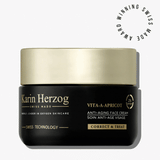
For example, someone using an oxygen-focused routine might choose a non-alcohol toner after cleansing, then follow with their treatment cream. Karin Herzog offers toners and exfoliators within its prep category, designed to rebalance the skin before the next step. That kind of placement makes sense in a routine built around layered actives.
If you're using more intensive products, keep exfoliating toner on a separate rhythm rather than stacking everything at once.
Stronger isn't smarter when you're layering advanced skin care. Prep the skin well, then let each product do its job.
For a practical walkthrough, this guide on how to use skin toner gives a useful reference point.
When to be cautious
Be careful with exfoliating toners if you are also using active night treatments. The goal is improved performance, not cumulative irritation.
A few sensible rules help:
- Use hydrating toners daily if your skin likes them
- Use exfoliating toners less often and adjust based on sensitivity
- Don’t chase tingling as proof a toner is working
- Pause acids when your skin feels reactive
This short demonstration is helpful if you want to see application technique in action.
The Simple Step to Transforming Your Skin
Toner has come a long way from the harsh formulas many people still remember. The classic cleanse, tone, moisturise routine was clinically validated in the late 1960s, and Australia has since seen a 70% decline in prescriptions for harsh alcohol astringents since the 1990s, according to Wikipedia’s overview of toner in skin care). That shift says a lot. Skin care has moved away from stripping and toward support.
That’s why toner skin care still matters. The right toner helps your skin feel balanced after cleansing, improves how the next products sit, and can make a treatment-focused routine feel more comfortable and more coherent.
It doesn't need to be flashy. It needs to fit your skin.
If you're also building a broader glow strategy, lifestyle factors can help support what your topical products are doing. This article on Infrared Sauna Benefits For Skin is a useful example of how people think about skin support beyond the bathroom shelf.
Choose a toner with a clear purpose. Use it consistently. Let it make the rest of your routine work smarter.
If you're ready to build a more balanced, high-performance routine, explore Karin Herzog for Swiss-made oxygen skincare, educational guides, and prep-step products designed to fit thoughtfully into a results-focused regimen.