
You’re probably seeing the same words again and again on product pages: whitening, lightening, brightening, radiance, glow. Some jars promise to fade spots. Others claim to “correct tone”. A few look suspiciously aggressive, especially if they’re sold online with vague ingredient lists and dramatic before-and-after language.
That confusion is understandable. Individuals aren’t trying to change who they are. They’re trying to deal with acne marks, sun spots, post-inflammatory pigmentation, dullness, or that uneven tone that seems to get worse after summer. In Australia, that question gets more complicated because our UV exposure is intense, our skin often sits in a cycle of inflammation and pigment rebound, and imported products don’t always reflect local safety standards.
Introduction Decoding the Quest for Luminous Skin
The language around whitening skin care products has drifted far from what many consumers want. In practice, consumers are primarily searching for clearer, calmer, more even-looking skin. They want less visible pigmentation, more light reflection, and a complexion that looks healthy rather than bleached.
That demand is massive. The global skin lightening products market was valued at USD 21.6 billion in 2025 and is projected to reach USD 23.2 billion in 2026, reflecting strong consumer demand for products addressing skin discoloration, hyperpigmentation, and uneven skin tone, according to Future Market Insights’ skin lightening products market report.
Why this matters more in Australia
Australian skin faces a particular set of pressures. High UV exposure can deepen existing pigmentation, trigger new dark marks, and make skin more reactive to harsh active ingredients. That means a product that looks effective on paper may create a frustrating cycle in real life: irritation first, pigmentation second, then more product layering to fix the irritation.
A smarter approach starts with language. If you understand the difference between reducing excess pigment and trying to globally lighten the skin, you make better decisions fast.
Healthy radiance comes from better skin function, not from forcing skin into distress.
The most useful way to think about this topic is simple. Ignore dramatic marketing. Focus on clarity, even tone, barrier health, pigment control, and daily UV protection. Those are the foundations of a luminous complexion that still looks like you.
Whitening Versus Brightening Understanding the Difference
The easiest way to separate these terms is to think about a favourite white shirt.
If you spill coffee on it, you’ve got two very different options. One is to bleach the whole fabric in the hope that the stain becomes less noticeable. The other is to gently lift the stain, clean the fibres, restore brightness, and protect the material so it still looks like itself. Skin works in a similar way.

What whitening usually implies
In beauty marketing, whitening often suggests reducing visible pigment by interfering with melanin production. In a controlled dermatological context, that can mean treating localised hyperpigmentation such as age spots, post-acne marks, or sun damage. The problem starts when the term is used loosely, because it can also imply aggressive full-face or full-body lightening.
That’s where consumers get misled. A cream may be marketed as a solution for “fairness” or “whitening” when what it really does, or claims to do, is suppress pigment broadly. If the product is poorly formulated or unregulated, the risk rises quickly.
What brightening really means
Brightening is the modern, skin-health-first concept. It doesn’t aim to erase your natural skin tone. It aims to improve the way your skin looks and behaves.
Brightening can involve several things working together:
- Fading localised marks such as post-inflammatory pigmentation or UV spots
- Improving surface smoothness so skin reflects light more evenly
- Supporting turnover so pigmented surface cells shed naturally
- Reducing dullness caused by congestion, dehydration, or rough texture
- Calming inflammation so fewer new marks form after breakouts or irritation
A brightening routine often leaves skin looking fresher and more even, even before every dark spot has fully faded.
The practical test
When you read a product label, ask one question: Is this trying to restore balance, or overpower the skin?
Here’s a quick distinction.
| Approach | Main intention | Typical result | Potential concern |
|---|---|---|---|
| Whitening | Reduce visible pigment, sometimes broadly | Lighter-looking dark marks, sometimes an overall lightening effect | Can drift into harsh or unsafe territory if poorly regulated |
| Brightening | Improve radiance, clarity, and even tone | More luminous, smoother, healthier-looking skin | Usually safer when paired with barrier support and SPF |
Why the distinction matters
This isn’t just semantics. It changes how you shop, how you patch test, and what results you expect.
If you’re treating melasma, acne marks, or sun spots, you’re not looking for a personality-changing cream. You’re looking for ingredients that regulate excess pigment while respecting the skin barrier. That’s brightening.
Practical rule: If a product promises a dramatic change in your overall skin colour, pause. If it promises help with uneven tone, dark spots, and radiance, that’s usually the healthier category to explore.
For most Australian consumers, brightening is the safer and more realistic goal. It fits the biology of hyperpigmentation better, and it fits our environment better too.
The Science Behind a Brighter Complexion
A brighter complexion doesn’t come from one magic ingredient. It comes from understanding what’s causing the darkness or dullness in the first place. Sometimes the issue is excess melanin production. Sometimes it’s slow turnover. Sometimes it’s inflammation. Often it’s all three.

Tyrosinase inhibitors slow the pigment pathway
One of the most important enzymes in pigmentation is tyrosinase. When skin is exposed to triggers such as UV light or inflammation, this enzyme helps drive melanin production. Many brightening ingredients work by interrupting that process.
A standout example is hexylresorcinol. In Australian skincare formulations, hexylresorcinol at 1% concentration achieves skin lightening efficacy equivalent to 2% hydroquinone, reducing hyperpigmentation by inhibiting tyrosinase activity and melanin synthesis without hydroquinone’s associated risks, according to Sytheon’s review of safe high-performing skin lightening ingredients.
That matters because older pigment-fading systems often relied on stronger, more controversial pathways. Modern formulators look for ingredients that can interrupt excess pigment formation while being easier for skin to tolerate over time.
Other commonly used brightening ingredients in this category include arbutin, vitamin C derivatives, and azelaic-acid-style approaches, although results depend heavily on concentration, stability, and the whole formula around them.
For a broader ingredient literacy guide, this overview of active ingredients in skincare is useful because it helps connect ingredient names to real-world skin concerns.
Exfoliants work on the visible evidence
Not all darkness starts deep. Sometimes skin holds on to pigmented, damaged cells for too long.
Exfoliating ingredients help lift that surface build-up so skin appears clearer and reflects light more evenly. In practice, this can make a face look brighter even before deeper pigment has fully settled. AHAs are often used for this reason, especially in carefully chosen routines for rough, dull, or sun-weathered skin.
That said, exfoliation isn’t always the first move for reactive skin. In Australia’s UV-heavy environment, over-exfoliation can leave skin more vulnerable to redness and rebound pigmentation if SPF use isn’t impeccable.
Antioxidants and barrier support reduce repeat triggers
A good brightening plan doesn’t just fade old marks. It tries to reduce the conditions that create new ones.
Antioxidants help limit oxidative stress, while soothing and barrier-supportive ingredients can reduce the inflammatory cascade that often follows breakouts, harsh cleansing, friction, or too many actives layered together. This is why some of the most effective radiance routines look surprisingly restrained. They don’t attack the skin. They calm it, protect it, and nudge it back toward balance.
If you’re comparing ingredient options, a curated guide to products for hyperpigmentation can help you see how different categories are used in practice.
Ingredient comparison at a glance
| Ingredient | Primary Action | Best For | Considerations |
|---|---|---|---|
| Hexylresorcinol | Inhibits tyrosinase and melanin synthesis | Stubborn dark spots, uneven tone | Look for well-formulated products and introduce gradually |
| Arbutin | Helps regulate excess pigment formation | Sensitive skin, post-sun marks, uneven tone | Gentler option, but formula quality matters |
| Vitamin C | Antioxidant support and tone-brightening | Dullness, early sun damage, radiance | Can be unstable depending on the form used |
| AHAs | Lift dull, pigmented surface cells | Rough texture, surface discolouration | Can irritate sensitive or UV-stressed skin |
| Niacinamide | Supports barrier and helps improve evenness | Sensitive, oily, or redness-prone skin | Usually easy to pair with other actives |
The best brightening product isn’t the one with the longest ingredient list. It’s the one that matches the reason your skin looks uneven.
Navigating Skincare Safely in Australia
Australian consumers need a more cautious filter when shopping for whitening skin care products. A jar that looks polished online may still contain undeclared or restricted ingredients, and imported products can bypass the expectations many people assume are standard.

Why grey-market products are a real risk
The danger isn’t only irritation. It’s the mismatch between what a label implies and what the product may contain.
Australian Therapeutic Goods Administration data from 2025 shows over 150 skin lightener seizures in the past year containing undeclared hydroquinone above 2%, linked to a 20% increase in ochronosis cases among users, as noted in this PMC article discussing skin-lightening product safety issues.
Ochronosis is one of those complications people don’t expect until they’re dealing with it. Instead of correcting pigmentation, unsafe use can leave skin darker, patchier, and much harder to manage.
What safer shopping looks like
A sensible buying checklist is less glamorous than marketing, but it protects your skin.
- Check ingredient transparency. If the formula is vague, avoid it.
- Prioritise Australian-compliant products. Local standards matter, especially for pigment actives.
- Be wary of imported “miracle” creams. The more dramatic the promise, the more careful you should be.
- Treat SPF as part of the product decision. A brightening cream without sun protection strategy is incomplete.
- Patch test first. Even legal actives can irritate compromised skin.
This kind of decision-making fits with broader safe practices for skincare, especially if your skin is already reactive.
Regulation matters more under high UV
Australia’s environment changes the risk equation. Skin that’s repeatedly exposed to strong UV can become more pigment-prone after irritation, peeling, or barrier disruption. That means a product that’s merely “too harsh” somewhere else may become a pigmentation problem here.
If you want a practical overview of how professional-grade formulas differ from general cosmetic claims, this article on medical grade skincare gives useful context.
A short explainer helps underline why ingredient oversight matters.
Imported whitening creams often target urgency and insecurity. Safe brightening routines target the actual cause of uneven tone.
A better standard for Australian skin
The safest path usually looks less dramatic than social media would suggest. It includes regulated ingredients, moderate strengths, consistent sunscreen, and patience.
That approach isn’t slower because it’s weak. It’s slower because skin biology has a timeline, and forcing it usually backfires.
Finding the Right Brightening for Your Skin
A good brightening routine is personal. The ingredient that suits an oily, acne-marked face may be the wrong choice for dry, reactive skin with age spots. Start with the concern that bothers you most, then build around tolerance.
If your concern is ageing and sun-related uneven tone
Ageing skin often needs a dual-purpose approach. You want help with visible pigment, but you also want support for firmness, smoothness, and overall vitality.
Vitamin C-style antioxidants, carefully chosen retinoid pathways, and pigment regulators can work well here. The key is not to stack too much at once. Mature skin can look dull from dehydration and rough texture as much as from pigment itself, so moisturising support matters just as much as active treatment.
If your skin is sensitive
Sensitive skin needs the gentlest route to even tone. Strong exfoliation and aggressive spot-fading plans often create the exact redness and inflammation that make pigmentation linger.
Arbutin is worth special attention here. Arbutin at 7% concentration yields an 81.3% effectiveness rate in reducing senile pigmentation and UV-induced spots after 3 months in open-label trials on Asian skin types relevant to Australia’s diverse population, according to this analysis of key ingredients in whitening skincare products.
That doesn’t mean everyone needs a high-strength arbutin product. It means arbutin has a reputation for being a gentler pigment-focused active, especially when paired with a barrier-friendly routine.
For readers trying to match spot treatments to visible marks, this guide on how to say goodbye to stubborn dark spots with the best spot corrector can help frame what to look for.
If you’re acne-prone
Post-inflammatory hyperpigmentation is common in acne-prone skin. In plain terms, the breakout fades but the mark stays.
The routine here should do two things at once:
- Reduce the chance of new breakouts.
- Help old marks fade without clogging pores or over-irritating skin.
That often means lighter textures, careful use of salicylic-acid-style products, niacinamide, and selective pigment correctors. Heavy occlusive whitening creams can be the wrong fit if they trap heat, feel greasy, or encourage overuse because the results seem slow.
Three simple matching rules
- Dry and mature skin usually does better with fewer, more supportive actives.
- Reactive skin usually needs pigment correction plus calming ingredients.
- Congested skin benefits from lightweight formulas that treat both breakouts and marks.
If your skin stings, flakes, and looks shinier but not brighter, your routine is probably too aggressive.
The right formula should make skin look more even over time, not feel punished in the process.
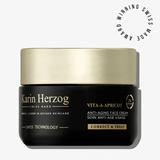
The Karin Herzog Approach to Supreme Radiance
A lot of the old conversation around whitening skin care products has centred on suppressing pigment as hard as possible. That’s a narrow view of what makes skin look luminous. Brighter skin isn’t only about less pigment. It’s also about better turnover, smoother texture, stronger hydration, calmer inflammation, and healthier surface reflection.

Why the radiance conversation is shifting
There’s a strong reason this shift matters in Australia. A contrarian perspective from the available data notes that 28% of Aussie women aged 35+ are seeking “natural brightening” for age spots but face import risks, creating space for oxygen-infused Swiss technology that boosts clarity without bleaching, as discussed in this ABC News-linked reference on risky skin whiteners.
That’s a meaningful change in mindset. It moves the goal away from “lighter at any cost” and toward skin that looks clearer, fresher, and more refined.
The oxygen-based logic
Karin Herzog’s philosophy sits in that newer, healthier camp. Instead of relying on a harsh whitening story, the focus is on creating conditions where skin can renew more efficiently and look more even naturally. The brand’s stabilised oxygen approach is explained in more detail in the science of oxygen and why Karin Herzog stands out.
From a formulator’s perspective, that idea is appealing because radiance is rarely solved by one pigment blocker alone. Skin looks clearer when cell renewal is supported, when surface build-up is reduced, and when the formula helps the complexion look energised rather than stripped.
Where this fits in a modern routine
An oxygen-based approach can sit alongside the brightening principles already discussed:
- Support renewal rather than trying to shock the skin
- Improve visible clarity through better skin function
- Pair with pigment-focused actives carefully instead of over-layering
- Keep the focus on radiance and even tone, not on bleaching language
A product philosophy can matter as much as one hero ingredient. Some formulas are built around correction at all costs. Others are built around comfort, consistency, and visible refinement over time.
For Australian users, especially those wary of imported bleaching creams or cycling through irritating actives, that distinction is useful. It creates a path toward clearer-looking skin without treating the skin barrier as disposable.
Building Your Personalised Radiance Routine
A brightening routine doesn’t need to be complicated. It needs to be consistent and ordered properly. A clean four-part structure (cleanse, treat, moisturise, protect) often leads to improved results.
Morning routine
In the morning, keep the focus on prevention and glow support.
- Cleanse lightly if your skin tolerates a morning cleanse. If you’re dry or sensitive, a gentle rinse may be enough.
- Apply your treatment step. Here, a brightening serum, antioxidant, or mild pigment-correcting formula can go.
- Moisturise if needed. Some skins need a dedicated cream, others are comfortable with a richer treatment serum.
- Finish with sunscreen. This is the essential step.
If you skip sun protection, you make it easier for new pigmentation to form and harder for old marks to fade. In Australia, that matters every day, not just at the beach.
Evening routine
Night is for repair and correction. You’ve got more room here for stronger actives, but restraint still wins.
A simple pattern works well:
- Remove sunscreen and cleanse thoroughly.
- Apply one main treatment active.
- Follow with moisturising or barrier support.
If you use exfoliating acids, don’t pile them onto the same night as every other active. If you use a retinoid-style product, don’t assume more frequency means faster brightening. For many people, irritation is what stalls progress.
The order that usually works
Apply products from thinner to thicker texture. Water-light serums first. Creams later. Oils last, if you use them.
That said, texture isn’t the only rule. Some active systems come with brand-specific directions. If a product has a defined method of use, follow that over generic layering advice.
A routine that people can actually stick to
The best routine is one you’ll still be using in eight weeks.
Start with one brightening active, not three. If your skin stays calm, add slowly.
A practical radiance routine usually includes:
- One pigment-focused product
- One barrier-supportive product
- Daily SPF
- Patience
That sounds simple because it is. The complicated part isn’t the number of steps. It’s resisting the urge to over-correct every mark at once.
Conclusion Embrace Radiance Not Just Whiteness
The language of whitening skin care products can be loaded, confusing, and sometimes unsafe. But the skin goals underneath it are often straightforward. These commonly include less visible pigmentation, more even tone, smoother texture, and healthy luminosity.
That’s why the better frame is radiance, not blanket whiteness. Radiance respects your natural skin tone. It focuses on clarity, balance, and skin that reflects light beautifully because it’s functioning well. It also pushes you toward smarter choices: regulated formulas, thoughtful actives, gentle progress, and sunscreen every day.
If you remember one thing, let it be this. The most successful brightening routines don’t fight your skin into submission. They help it recover, regulate, and reveal a more even version of itself.
You don’t need the loudest promise on the shelf. You need a routine that your skin can live with, and improve under, week after week.
If you’d like a science-led approach to radiance that fits Australian skin concerns, explore Karin Herzog for Swiss-made oxygen skincare focused on clarity, renewal, hydration, and even-looking skin.